This is the first article in HealthBanyan’s Glycemic Index Complete Guide series. | Part 2: Low GI Fruits → | Part 3: GI of Indian Foods →
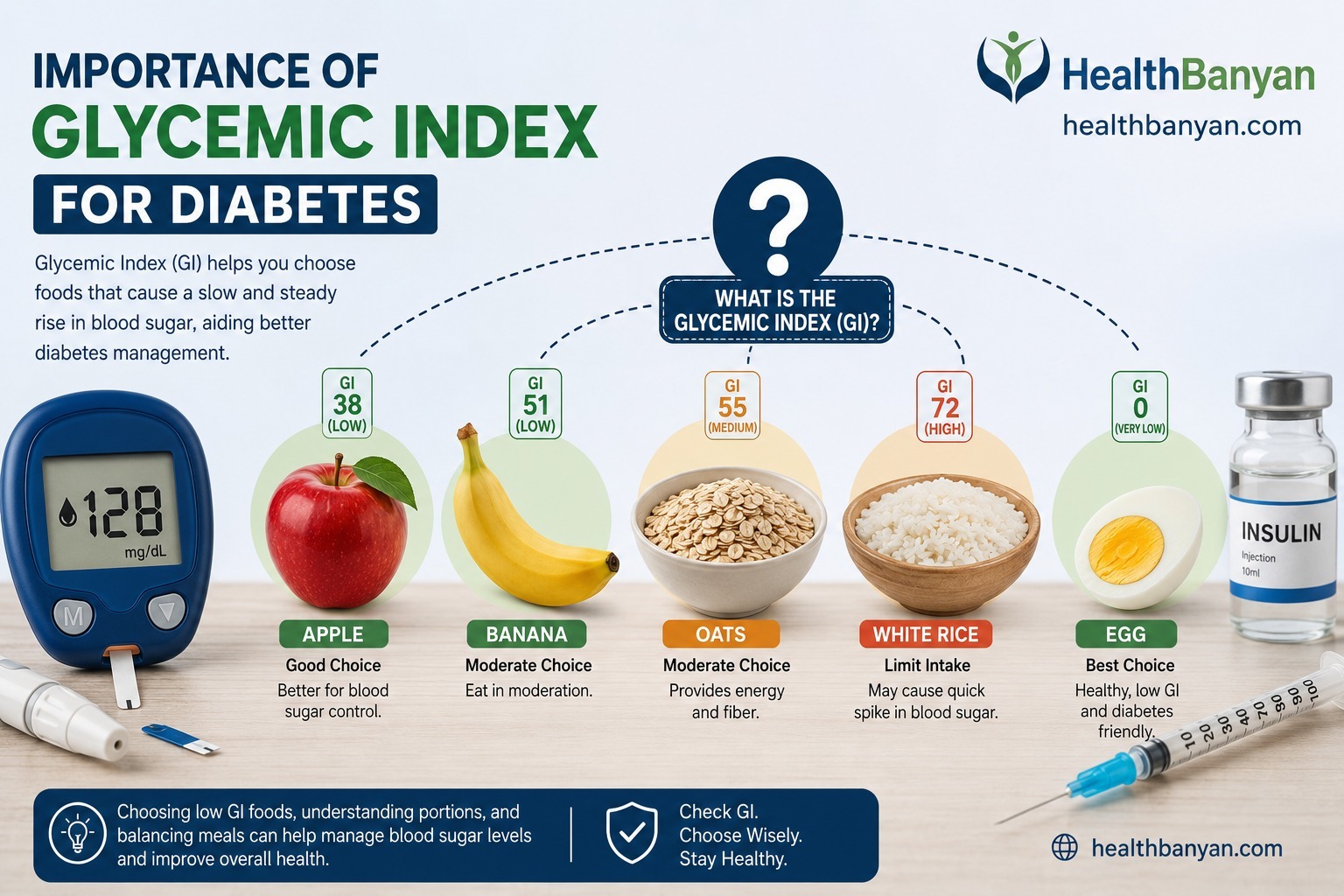
The GI scale — where 100 is pure glucose and lower numbers mean safer, slower blood sugar rise
GI of 55 or below = Low GI. Safest zone for diabetics and weight management
High GI danger zone — white bread, sugar, polished white rice cause rapid sugar spikes
GI of parboiled rice — one of the safest rice options for diabetics (see Rice vs Roti →)
📅 Published: July 23, 2026 | 🩺 Medically Reviewed: July 23, 2026 | ⏱ Reading time: 4 min
🍚 You have been told to “avoid sugar” and “eat healthy.” But nobody told you that two bowls of white rice can spike your blood sugar just as badly as a spoonful of sugar — even though they look nothing alike. That is the power of the Glycemic Index. And understanding it could change how you eat forever.
The Glycemic Index (GI) is the most underused tool in diabetes and weight management — yet it is one of the most powerful. In this article, you will learn exactly what GI is, how to use the 0–100 scale, and why it matters for you or someone you love with diabetes, prediabetes, or weight concerns.
ग्लिसमिक इंडेक्स वह संख्या है जो आपके खाने और आपकी शुगर के बीच का असली रिश्ता बताती है।
What Is Glycemic Index (GI)? — The Simple Explanation
ग्लिसमिक इंडेक्स क्या है — सरल भाषा में
The Glycemic Index (GI) is a numerical ranking system, from 0 to 100, that measures how quickly a carbohydrate-containing food raises blood glucose (sugar) levels after eating. It compares each food’s effect to pure glucose, which is assigned a GI of 100 — the maximum possible spike.
Think of GI as a speed dial for sugar release. High-GI foods dump glucose into your bloodstream rapidly, causing spikes. Low-GI foods release glucose gradually, like a slow drip — giving your body time to manage it properly through insulin.
70+
High GI 🔴
White bread, white rice, sugar, cornflakes, watermelon, potato
Fast sugar spike — avoid or limit
56–69
Medium GI 🟡
Basmati rice, whole wheat bread, banana, papaya, mango
Moderate — portion control essential
55↓
Low GI 🟢
Lentils (dal), rajma, brown rice, oats, apples, pears
Safest — slow, steady sugar release
🔑 GI was developed at the University of Toronto in 1981 by Dr David Jenkins — it has since been tested on thousands of foods worldwide and forms the basis of diabetic dietary guidelines in over 40 countries.
GI 1981 में विकसित हुआ और आज दुनिया भर में डायबिटीज आहार गाइड का आधार है।
“I Was Eating ‘Healthy’ Brown Bread — But My Sugar Was Still High.” — Sunita’s Story
“मैं ‘स्वस्थ’ ब्राउन ब्रेड खा रही थी — फिर भी शुगर बढ़ी रही।”
💡 Lesson
Foods that look healthy can have the same GI as junk food. “Brown” or “natural” labels mean nothing without checking the GI. The number matters — not the colour.
📊 GI of Common Indian Foods — at a Glance
सामान्य भारतीय खाने का GI — एक नज़र में
| Food | GI | Category | Advice for Diabetics |
|---|---|---|---|
| Moong dal (yellow) | 38 | 🟢 Low | Excellent — eat daily |
| Oats (plain, rolled) | 55 | 🟢 Low | Good breakfast choice |
| Parboiled rice (sela/ukda) | 38–41 | 🟢 Low | Best rice choice for diabetics |
| Whole wheat roti (thin) | 49–55 | 🟡 Low-Med | Acceptable — 1–2 per meal |
| Basmati rice (cooked) | 50–58 | 🟡 Medium | Smaller portions only |
| White bread / maida roti | 71–75 | 🔴 High | Avoid — spikes blood sugar fast |
| White polished rice | 72 | 🔴 High | Replace with parboiled rice |
| Poha (beaten rice) | 70–75 | 🔴 High | Limit — add peanuts + vegetables to lower impact |
| Sugar / glucose | 65–100 | 🔴 Very High | Use only for treating hypoglycaemia |
Why Glycemic Index Changes the Game for Diabetics
डायबिटीज में GI क्यों इतना महत्वपूर्ण है
🩸
Blood Sugar Control
Low GI foods maintain stable blood sugar between meals — reducing dangerous spikes and the need for insulin correction. Essential for every diabetic managing their medication correctly.
⚖️
Weight Management
High GI foods cause rapid spikes followed by crashes — triggering hunger within hours. Low GI foods keep you full longer, reducing total caloric intake naturally.
❤️
Heart Protection
Lower GI diets are associated with reduced LDL cholesterol, lower triglycerides, and better arterial function — particularly important for diabetics with elevated cardiac risk.
4 Common Myths About Glycemic Index — Busted
GI के बारे में 4 आम मिथ्या
Frequently Asked Questions — Glycemic Index
Q: Does cooking method affect glycemic index?
Yes significantly. Overcooking increases GI — overcooked rice has a higher GI than al dente rice. Cooling cooked rice for 12–24 hours converts starch to resistant starch, reducing effective GI by up to 35%. Learn more in our Rice vs Roti guide →
Q: Can I mix high and low GI foods to lower the overall GI of a meal?
Yes — this is one of the most practical applications of GI. Adding dal, protein (curd, egg, paneer), or fibre-rich vegetables to a rice meal significantly lowers the meal’s overall glycaemic impact. This is why sambar rice has a lower blood sugar effect than plain white rice alone.
Q: What is the GI of jaggery (gur) — is it better than sugar for diabetics?
Jaggery has a GI of approximately 84 — actually higher than white table sugar (GI 65). Despite its traditional and mineral-rich reputation, jaggery raises blood sugar faster than regular sugar and is not a safe alternative for diabetics in significant amounts.
“The Glycemic Index is the single most practical dietary tool I recommend to every diabetic patient — yet it is almost never explained at the time of diagnosis. Understanding it takes 10 minutes. Applying it consistently changes blood sugar control within weeks.”
“GI समझना 10 मिनट का काम है — और हफ्तों में शुगर बदल देता है।”
✍️ Written By
Dr Nirmala Singh
Expert Clinician & Senior Paediatrician
Medical Writer, HealthBanyan
🩺 Reviewed By
HealthBanyan Medical Research Team
Evidence-Based Clinical Review
HealthBanyan
References
1. Jenkins DJ, et al. Glycemic index of foods: a physiological basis. American Journal of Clinical Nutrition. 1981.
2. Atkinson FS, Foster-Powell K, Brand-Miller JC. International tables of GI and glycaemic load values. Diabetes Care. 2008;31(12).
3. ICMR-NIN. Dietary Guidelines for Indians. National Institute of Nutrition, Hyderabad. 2024.