
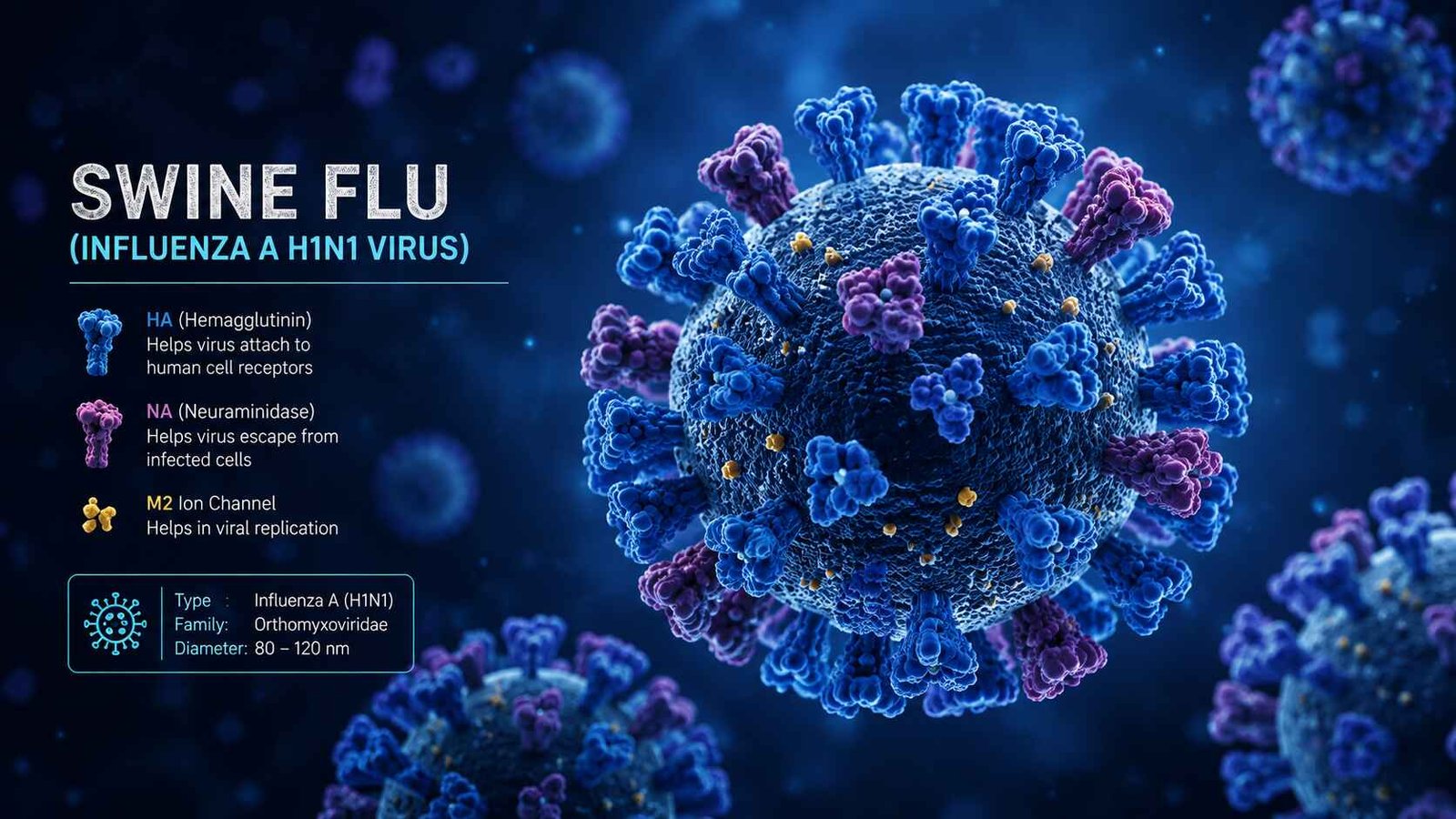
Swine Flu (H1N1): Symptoms, Causes, Treatment, Prevention & When to See a Doctor
Medical note: “Swine flu” is the commonly used term for influenza A(H1N1). The 2009 H1N1 virus subsequently became part of the viruses causing seasonal influenza. This article is for patient education and should not replace examination or treatment by a qualified clinician.
What if your “normal flu” is actually something that needs medical attention?
What if a high fever, dry cough and extreme body ache are not just a seasonal viral infection?
Many people still call influenza A(H1N1) “swine flu.” Most influenza infections are self-limiting, but some patients—especially young children, older adults, pregnant women and people with chronic illnesses—can develop serious complications such as pneumonia.
The key is not to panic. The key is recognising the warning signs early.
What Is Swine Flu?
Swine flu is the popular name for infection caused by influenza A(H1N1) viruses. The H1N1 virus responsible for the 2009 pandemic is now established as a seasonal human influenza virus.
Circulating Strain: The Indian Council of Medical Research (ICMR) confirmed the virus belongs to the A/Missouri/11/2025 (H1N1)pdm09-like lineage (clade 6B.1A.5a2a).
Influenza is a contagious respiratory infection. It can spread from person to person through respiratory particles and close contact. In India, influenza can circulate during different periods of the year rather than following only one predictable season.
In simple words
Swine flu = H1N1 influenza.
It does not mean that every person with H1N1 has caught the infection from a pig.
The symptoms can overlap considerably with other respiratory infections, so symptoms alone cannot reliably confirm H1N1. Testing may be required depending on the clinical situation and local guidance.
A Real-Life Story: “Mujhe laga bas viral fever hai…”
The following is a fictionalised patient-education example, not a report of an identifiable patient.
Rahul, a 32-year-old office worker in India, developed fever, dry cough and severe body ache.
“Season change hai, viral hoga,” he thought.
He took rest at home and expected to feel better in a day or two. But the fever continued, and by the third day he became unusually breathless while walking to the bathroom.
That was the turning point.
Instead of continuing self-medication, he consulted a doctor. His symptoms and clinical assessment raised concern for influenza with possible lower respiratory involvement, and appropriate testing and treatment were considered.
The lesson?
A fever by itself is not necessarily alarming.
But fever + worsening cough + breathing difficulty + unusual weakness should not simply be ignored.
How Does H1N1 Influenza Affect the Body?
Influenza viruses primarily infect the respiratory tract.
A simplified sequence looks like this:
Virus enters → infects respiratory cells → immune system responds → inflammation develops → fever, cough, body ache and fatigue occur.
The immune response is responsible for many of the symptoms we feel.
In uncomplicated cases, the illness gradually settles as the immune system clears the infection. In some people, however, influenza can involve the lower respiratory tract and cause complications such as pneumonia. It can also worsen existing medical conditions.
How Does Swine Flu Spread?
H1N1 influenza can spread when an infected person releases respiratory particles while:
- coughing
- sneezing
- talking
- breathing at close range
Transmission is more likely with close or prolonged contact, particularly in crowded indoor environments.
Can you catch it from pigs?
The term “swine flu” can be misleading.
The pandemic H1N1 virus that emerged in 2009 became established as a human seasonal influenza virus. Therefore, calling every H1N1 infection “flu caught from pigs” is incorrect.
Swine Flu Symptoms
Symptoms often begin relatively suddenly.
Common symptoms include:
- Fever or feeling feverish
- Dry cough
- Sore throat
- Headache
- Muscle and joint aches
- Marked tiredness or weakness
- Runny or blocked nose
- Chills
- Sometimes vomiting or diarrhoea, particularly in children
WHO notes that influenza commonly causes sudden fever, cough, headache, muscle/joint pain, severe malaise, sore throat and runny nose.
How long does it last?
Many people recover from the major symptoms within about a week, although cough and fatigue can persist longer.
Swine Flu Red Flags: When Should You Worry?
Seek prompt medical evaluation if symptoms are severe, rapidly worsening or accompanied by:
- Difficulty breathing or shortness of breath
- Chest pain or pressure
- Bluish/grey lips or face
- Confusion or unusual drowsiness
- Severe weakness
- Dehydration or inability to keep fluids down
- Persistent or worsening high fever
- Symptoms that initially improve and then suddenly become worse
For children, concerning signs can include difficulty breathing, unusual sleepiness, poor feeding/drinking or signs of dehydration.
Breathing difficulty is particularly important. Severe influenza can progress to pneumonia and, in some cases, respiratory failure or other serious complications.
Who Is More at Risk of Complications?
Influenza can affect anyone, but severe disease is more likely in certain groups.
These include:
- Young children
- Adults aged 65 years and above
- Pregnant women
- People with chronic lung disease
- People with heart disease
- People with diabetes
- People with kidney, liver or neurological disorders
- People with weakened immune systems
- People receiving certain cancer treatments
WHO specifically identifies young children, older adults, pregnant women and people with serious underlying medical conditions as higher-risk groups.
Swine Flu: Myths vs Facts
Myth 1: “Swine flu means you caught it from a pig.”
Fact: Not necessarily.
The H1N1 virus responsible for the 2009 pandemic became a seasonal human influenza virus. The name “swine flu” remains common, but it can create confusion.
Myth 2: “Every fever with cough is swine flu.”
Fact: No.
Many respiratory infections can cause fever and cough. Symptoms alone cannot reliably distinguish H1N1 from other viral infections.
Myth 3: “Antibiotics cure swine flu.”
Fact: Antibiotics treat bacterial infections, not influenza viruses.
A doctor may prescribe antibiotics if there is evidence or strong suspicion of a bacterial complication, but antibiotics should not routinely be self-started for influenza.
Myth 4: “If I feel better after one day, I can immediately return to normal activities.”
Fact: Feeling better is encouraging, but you should still take reasonable precautions to reduce transmission and avoid overexertion.
Myth 5: “Healthy people never develop severe influenza.”
Fact: Most healthy people recover, but severe influenza can occasionally occur outside traditionally high-risk groups.
That is why worsening symptoms matter more than simply assuming that you are low-risk.
How to Prevent Swine Flu
1. Consider seasonal influenza vaccination
Vaccination is the most important preventive measure against influenza and can reduce the risk of severe disease. WHO recommends seasonal influenza vaccination, with annual vaccination generally advised because circulating viruses and immunity change over time.
For India-specific recommendations, vaccination decisions should take into account current national guidance and individual risk factors.
2. Practise good respiratory hygiene
When coughing or sneezing:
- Cover your mouth and nose.
- Prefer a tissue or your elbow rather than your bare hands.
- Dispose of tissues appropriately.
- Wash your hands afterwards.
3. Stay home when significantly unwell
If you have an acute respiratory illness, avoid unnecessary close contact with others—particularly vulnerable family members.
4. Improve ventilation
Whenever practical, keep indoor spaces adequately ventilated, especially when someone has respiratory symptoms.
5. Don’t share personal items unnecessarily
Avoid sharing items that may become contaminated with respiratory secretions.
Swine Flu Treatment: What Is Usually Done?
Treatment depends on the patient’s age, medical history, severity and timing of symptoms.
For mild illness
A clinician may recommend supportive care such as:
- Adequate fluids
- Rest
- Fever/symptom relief
- Monitoring for worsening symptoms
- Staying away from close contacts while acutely ill
Most otherwise healthy people recover without hospitalisation.
What about antiviral medicines?
Antiviral medicines such as oseltamivir may be used for influenza in appropriate patients.
They are particularly important for people at higher risk of complications, those with severe or progressive disease, and hospitalised patients. Evidence and guidelines generally support starting treatment as early as possible; benefit is greatest when treatment is started early, but treatment may still be appropriate after 48 hours in severe or high-risk cases.
Do not self-prescribe oseltamivir. The appropriate drug, dose and duration depend on factors such as age, weight, pregnancy, kidney function, disease severity and current clinical guidance.
India’s National Centre for Disease Control maintains technical guidance covering seasonal influenza/H1N1, including patient categorisation, home care, masks, clinical protocols and laboratory testing.
Is an H1N1 Test Always Needed?
No.
The decision to test depends on the clinical situation, severity, outbreak context, healthcare setting and whether the result will change management.
Molecular tests such as RT-PCR can identify influenza viruses, but testing strategy should be determined by a healthcare professional rather than by symptoms alone.
Doctor’s Expert Perspective — Dr Nirmala Singh
“Swine flu should be taken seriously, but there is no need for unnecessary panic. Most patients recover with appropriate supportive care, while early recognition of high-risk patients and worsening respiratory symptoms is crucial.”
“The biggest mistake is delaying medical evaluation when fever is accompanied by breathlessness, chest symptoms or rapidly worsening weakness.”
Editorial note: If this quote is intended for publication as an attributed statement from Dr Nirmala Singh, it should be reviewed and approved by the doctor before publishing.
Swine Flu: Quick Summary
Save this checklist:
- Swine flu commonly refers to influenza A(H1N1).
- It is a respiratory viral infection.
- Common symptoms include sudden fever, cough, sore throat, body ache and severe fatigue.
- Most people recover, but complications can occur.
- Young children, older adults, pregnant women and people with certain chronic illnesses are at higher risk.
- Breathlessness, chest pain, confusion or severe deterioration require urgent medical attention.
- Antibiotics do not treat influenza viruses.
- Antivirals may be appropriate for selected patients and work best when started early.
- Do not self-start prescription antivirals.
- Seasonal influenza vaccination is an important preventive measure.