
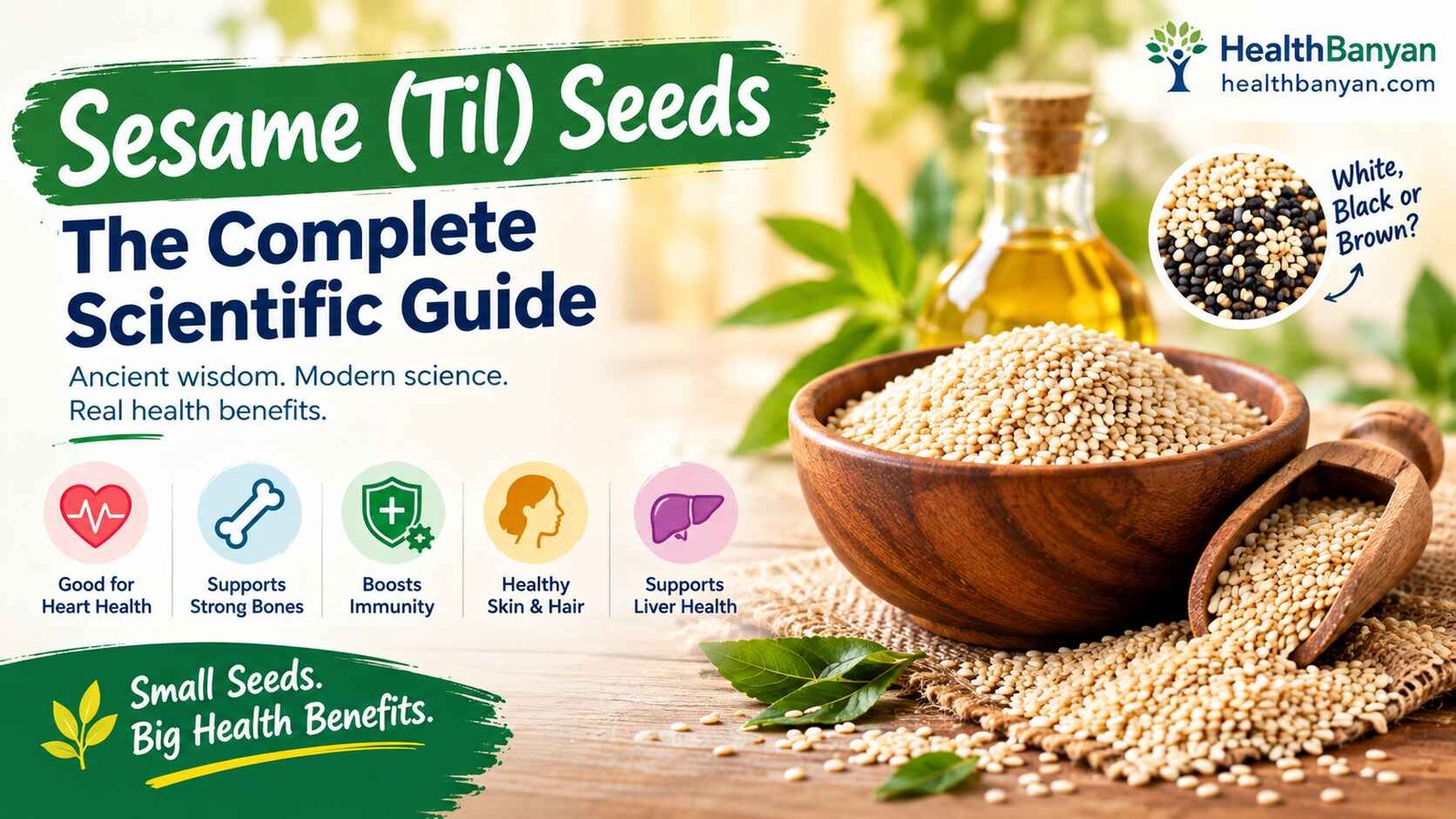
Sesame Seeds (Til): Nutrition, Health Benefits, How to Eat and Safety
From til chutney and winter ladoos to sesame oil, this complete guide explains what sesame seeds contain, what research says about their potential benefits, how to enjoy them, and when to take care.
Introduction: Are Sesame Seeds Really as Healthy as They Seem?
A spoonful of til in chutney, sesame sprinkled over a roti, or a til-gur ladoo during winter—sesame seeds have been part of everyday Indian food for generations. They are small, flavourful and versatile, but they also contain nutrients and plant compounds that have attracted scientific interest.
Sesame seeds, known as til in Hindi, are the edible seeds of Sesamum indicum. They provide unsaturated fats, protein, fibre and minerals such as calcium, iron and magnesium. They also contain distinctive plant compounds called lignans, including sesamin and sesamolin.
But does eating sesame improve blood pressure, cholesterol, bone health or blood sugar? Are black sesame seeds healthier than white ones? How much should you eat, and who needs to be careful?
At a Glance: What Are the Main Benefits of Sesame Seeds?
Sesame seeds add unsaturated fats, plant protein, minerals and lignans to everyday meals. Research has explored sesame and its compounds in relation to blood pressure, cholesterol, glucose regulation, inflammation and oral health. However, many studies are small or short-term, and findings from sesame oil or concentrated supplements cannot automatically be applied to whole seeds.
Nutrition
Provides fats, protein, fibre and several minerals.
Plant compounds
Contains lignans such as sesamin and sesamolin that are being studied.
Everyday use
Can be added to chutney, rotis, vegetables and other dishes.
Important limit
Not a substitute for prescribed medicines or established care.
1. What Are Sesame Seeds?
Sesame is an oilseed crop cultivated in many warm regions of the world and widely used in Indian cooking. Its seeds are eaten whole, ground into pastes, added to sweets and savoury dishes, or processed to produce sesame oil.
In India, sesame appears in foods such as til chutney, til-gur ladoo, chikki, bakery products, spice mixes and seasonal dishes. Sesame oil is also used in several regional cuisines.
Traditional systems of medicine, including Ayurveda, have described uses of sesame and sesame oil. These traditional uses are important cultural context, but each specific health claim should be assessed separately against modern clinical evidence.
2. White vs Black Sesame Seeds: What Is the Difference?
White, black and brown sesame seeds differ in colour, flavour, seed-coat characteristics and, in some cases, composition.
White sesame is often sold hulled, although both hulled and unhulled white seeds are available. Hulled seeds have had their outer coat removed. Black sesame generally retains its dark outer coat and has a stronger, more pronounced flavour.
The distinction matters nutritionally. The seed coat contributes fibre and plant compounds, while removing it changes the mineral composition and the way some nutrients are absorbed. Calcium values can differ substantially between hulled and unhulled seeds, so the calcium figure for one type should not be applied to all sesame products.
Black sesame may contain more of certain pigments and antioxidant compounds, but this does not establish that it is universally healthier than white sesame. The best choice depends on the food, the nutrient you are seeking and your dietary preferences.
3. Sesame Seeds Nutrition: What Do They Contain?
Sesame seeds are energy-dense because a substantial proportion of their weight consists of fat. Much of this is unsaturated fat, but the calories still count toward total daily energy intake.
They also contain protein, fibre and several minerals. Their precise nutritional profile depends on whether the seeds are hulled or unhulled, the variety, growing conditions and processing.
| Nutrient or component | Why it matters |
|---|---|
| Unsaturated fats | Provide energy and can fit into a heart-conscious eating pattern when they replace less favourable fat sources. |
| Protein | Supports tissue maintenance and other normal body functions. |
| Calcium | Needed for bones, teeth, muscle function and nerve signalling. |
| Iron | Required for haemoglobin production and oxygen transport. |
| Magnesium | Involved in muscle, nerve and metabolic functions. |
| Fibre | Supports digestive health. |
| Sesamin and sesamolin | Sesame lignans studied for antioxidant and other biological effects. |
Sesame is a useful contributor to dietary variety, but it should not be treated as a complete nutritional solution. People with significant nutrient deficiencies may need dietary assessment, laboratory testing or prescribed supplements.
4. Ten Potential Health Benefits of Sesame Seeds
Scientific studies have investigated several possible benefits of sesame seeds, sesame oil and sesame-derived compounds. The strength of evidence differs between these areas, so it is important not to present every proposed effect as an established clinical benefit.
1. Heart-conscious nutrition
Sesame contains unsaturated fats that can fit into a balanced dietary pattern. Replacing some saturated fats with unsaturated fats may support cardiovascular health. The overall substitution matters more than simply adding sesame oil or seeds to an existing high-calorie diet.
2. Blood pressure
Some small clinical studies have reported changes in blood pressure following sesame or sesame-oil interventions. These results are promising but do not mean sesame reliably lowers blood pressure in everyone. It must not replace prescribed treatment.
3. Cholesterol
Sesame lignans and unsaturated fats have been studied for their possible effects on blood lipids. Some trials have reported improvements in selected cholesterol measures, but results depend on the product, dose and study design.
4. Bone nutrition
Sesame provides calcium, magnesium and other nutrients involved in bone health. However, calcium availability depends on the type of seed and its preparation. Sesame alone cannot prevent or treat osteoporosis.
5. Antioxidant activity
Sesamin, sesamolin and related compounds have been investigated for antioxidant activity. Laboratory findings do not automatically prove that eating sesame prevents a particular disease.
6. Glucose regulation
Studies have examined sesame and sesame oil in people with metabolic risk factors. The evidence is not strong enough to recommend sesame as a treatment for diabetes or as a way to discontinue medication.
7. Inflammation and joint symptoms
Sesame compounds have shown potentially relevant effects in laboratory and animal research, and some small human studies have explored joint symptoms. These findings need cautious interpretation.
8. Nutrient variety
Sesame adds flavour, unsaturated fat, minerals and some protein to meals. It can help make a varied diet more enjoyable, especially in chutneys, vegetable dishes and rotis.
9. Oral health research
Oil pulling with sesame oil has been investigated in small studies measuring oral bacteria, plaque and gum-related outcomes. It should not replace brushing, interdental cleaning or dental care.
10. Traditional skin and hair uses
Sesame oil is traditionally used to moisturise skin and for massage. Evidence that sesame products prevent hair loss or treat skin disease is insufficient to make broad medical claims.
5. How Much Sesame Should You Eat?
There is no single, officially established daily sesame dose that guarantees health benefits for every adult. The right amount depends on your usual diet, energy requirements, medical conditions, allergies and the form of sesame you consume.
For many adults, a modest culinary portion can be a practical starting point. A tablespoon of seeds is approximately 9 grams, although the weight varies with how the spoon is filled. Because sesame is energy-dense, larger portions can add substantial calories.
You can include sesame in everyday meals by:
- Sprinkling lightly roasted seeds over vegetables, poha, upma or salads.
- Adding ground sesame to chutney or a homemade seed mixture.
- Using tahini or sesame paste in suitable dishes.
- Including til in rotis or other recipes.
- Using sesame oil as one of several cooking oils, in an amount appropriate for your overall diet.
Til-gur ladoo and chikki can be part of occasional meals or festive eating, but their added sugar and energy content should be considered, particularly by people managing diabetes or weight.
Grinding or thoroughly chewing sesame may make its contents more accessible than swallowing intact seeds without chewing. Soaking and roasting change texture and flavour, but neither method guarantees that all nutrients will be absorbed better.
6. Sesame Seeds Side Effects and Safety Precautions
Sesame is a familiar food for many people, but it is not suitable for everyone. A nutritious food can still cause adverse reactions or be inappropriate in particular circumstances.
Sesame allergy: the most important precaution
Sesame can cause a food-allergic reaction, ranging from itching, hives or swelling to breathing difficulty, dizziness or anaphylaxis. Reactions can occur after eating seeds, sesame paste, tahini or sesame-containing foods. Sesame may also be present in sauces, bakery products, spice mixes and restaurant meals.
Anyone with a known sesame allergy should avoid the relevant allergen and follow their clinician’s allergy-management plan. If someone develops difficulty breathing, throat or tongue swelling, collapse or other signs of a severe allergic reaction after eating sesame, seek emergency medical help immediately and use prescribed emergency medication as directed.
Portion size and calories
Sesame contains useful nutrients but is calorie-dense. Adding large quantities to meals without accounting for the additional energy may make weight management more difficult.
Kidney stones and medical conditions
People with a history of kidney stones or a prescribed dietary restriction should discuss their individual needs with a clinician or registered dietitian. They should not assume that everyone with kidney stones must avoid sesame, or that soaking sesame makes it universally safe.
Medicines and supplements
Do not stop, reduce or change a prescribed medicine because you have started eating sesame. If you take thyroid medication, diabetes medicines, blood-pressure medicines or other regular treatments and are considering concentrated sesame supplements or a major dietary change, ask your healthcare professional about appropriate precautions.
Ordinary culinary use and concentrated supplements are not interchangeable. Evidence about a particular extract or supplement should not be used to make assumptions about every sesame food.
Pregnancy and breastfeeding
Normal food use is different from taking concentrated supplements. If you are pregnant or breastfeeding, have a relevant allergy or medical condition, or are considering high-dose products, discuss the product and amount with your healthcare professional.
7. Sesame Seeds: Myths vs Facts
Myth: Black sesame is always healthier than white sesame.
Fact: The varieties differ in flavour and composition, but colour alone does not determine which is best for every nutritional need.
Myth: Sesame seeds can cure diabetes or high blood pressure.
Fact: Sesame can be included in a balanced diet, but it is not a cure and should not replace prescribed treatment.
Myth: More sesame always means more health benefits.
Fact: Larger portions add more calories, and there is no universally proven therapeutic dose for routine use.
Myth: Sesame oil pulling can replace brushing.
Fact: Oil pulling has been studied for some oral-health outcomes, but it should not replace fluoride toothpaste, regular brushing, interdental cleaning or dental visits.
Myth: Natural foods cannot cause serious side effects.
Fact: Sesame allergy can be severe. Natural origin does not guarantee safety for every person.
8. Doctor’s Insight: How Should You Think About Til?
The most practical way to think about sesame is as a nutrient-rich food—not a medicine that works independently of the rest of your lifestyle.
A small amount of til chutney with a meal, ground sesame in a recipe or sesame sprinkled over vegetables can add flavour and nutrients. These are sustainable food choices when they suit your preferences and health needs.
At the same time, no single seed can compensate for an unbalanced diet, inactivity, smoking or poorly controlled medical conditions. If you have diabetes, high blood pressure, high cholesterol or osteoporosis, use sesame as one possible part of your dietary pattern while continuing the monitoring and treatment recommended by your healthcare professional.
Medical content should distinguish clearly between traditional use, laboratory research, small clinical trials and established treatment recommendations. That distinction helps readers make informed choices without unrealistic expectations.
9. Frequently Asked Questions About Sesame Seeds
Are sesame seeds good for health?
Sesame seeds provide unsaturated fats, protein, fibre and minerals. They can contribute to a balanced diet. Research suggests possible benefits in selected areas, but the evidence does not establish sesame as a treatment for disease.
How much til should I eat daily?
There is no universally recommended therapeutic daily dose. A modest culinary portion can fit into many diets, but individual requirements depend on total calorie intake, food choices, medical conditions and allergies.
Which is healthier: white or black sesame?
Neither is universally better. Hulled and unhulled seeds have different nutritional profiles, and the best choice depends on the nutrients, preparation and taste you prefer.
Can sesame seeds help increase calcium intake?
Yes, sesame can contribute calcium. However, the amount varies by product, and calcium content is not the same as calcium absorbed by the body. People with osteoporosis or a diagnosed deficiency should follow an appropriate dietary and medical plan.
Can people with diabetes eat sesame seeds?
Many people with diabetes can include plain sesame in suitable portions. The full meal matters: sweets such as til-gur ladoo contain added sugar, and sesame itself should not be used to replace diabetes medicines or monitoring.
Does sesame oil lower cholesterol or blood pressure?
Some studies have reported improvements with particular sesame interventions. The evidence is not sufficient to guarantee these effects in an individual. Use sesame oil as a food, not as a substitute for prescribed treatment.
Is sesame oil pulling necessary for oral hygiene?
No. Oil pulling is optional and should not replace standard oral hygiene or dental assessment. If you have gum disease, dental pain or persistent oral symptoms, seek dental care.
Can sesame cause allergies?
Yes. Sesame allergy can cause serious reactions, including anaphylaxis. People with a known allergy should avoid sesame and follow their allergy-management plan.
Is sesame safe during pregnancy?
Sesame eaten as a normal food may fit into many pregnancy diets, but individual allergies and medical conditions matter. Discuss concentrated supplements or specific dietary concerns with your healthcare professional.
Can sesame seeds replace calcium or iron supplements?
No. Sesame can contribute nutrients to the diet, but it should not be assumed to correct a diagnosed deficiency. The need for supplementation depends on clinical assessment and, where appropriate, testing.
For additional questions about daily intake, preparation, medicines and safety, read the complete Sesame Seeds FAQs, Myths and Facts guide.
10. Explore the Complete Sesame (Til) Seeds Series
This guide is the starting point for the HealthBanyan sesame series. Choose the detailed article that matches your question.
Final Takeaway
Sesame seeds are a versatile traditional food with valuable nutrients and plant compounds that continue to be studied. Their place in a healthy diet is best understood through realistic portions, varied food choices and careful interpretation of scientific evidence.
Enjoy til in ways that suit your meals and preferences, pay attention to allergy and medical precautions, and do not treat sesame seeds or sesame oil as a replacement for appropriate healthcare.
For more evidence-informed nutrition and health education, explore the complete series on HealthBanyan.com.
Medical disclaimer: This article is intended for general health education. It does not diagnose or treat disease and does not replace individual advice from a qualified healthcare professional.
Editorial note: Have the article reviewed by the named medical reviewer before publication. Verify numerical nutrient values, clinical-trial details and all medication-related advice against original sources before making specific claims.
References and further reading: During final medical review, add direct links to original publications and authoritative food-composition sources. The spoke articles cite research on sesame lignans, blood pressure and lipids, postmenopausal outcomes, oil pulling and osteoarthritis, alongside USDA FoodData Central and Indian food-composition tables. Check exact titles, authors, publication years, methods and conclusions before publication.