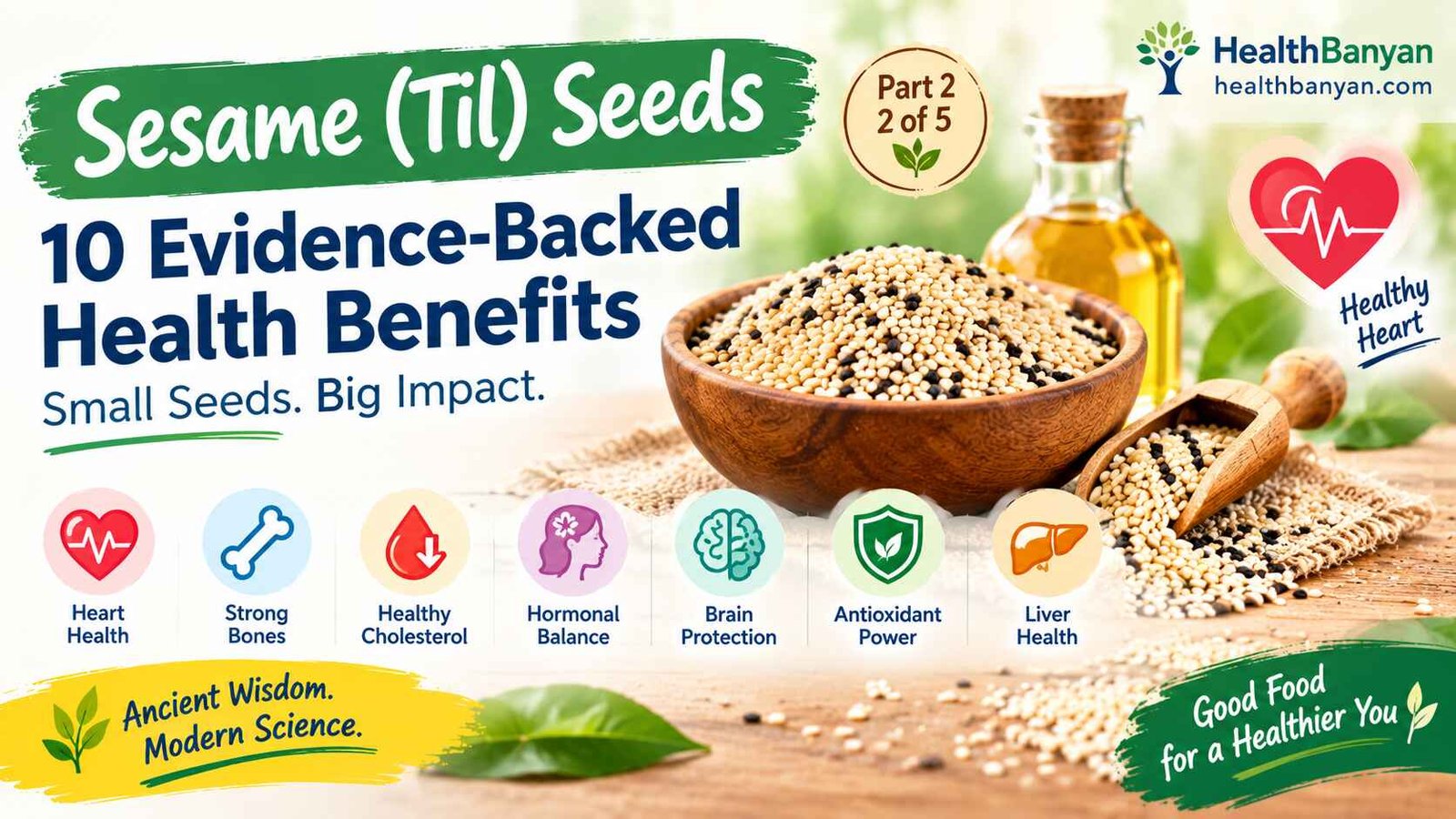
10 Evidence-Backed Health Benefits of Sesame
Organised by body system, with an honest note on how strong the evidence is. Tap any benefit to open it.
❤️ Blood Pressure · Strong evidence
Trials using sesame oil as the main cooking oil have reported meaningful drops in systolic and diastolic pressure, which return toward baseline when the oil is withdrawn. Proposed mechanisms: sesamin acting on vascular tone, magnesium-driven vasodilation, and sesamol reducing oxidative stress in artery walls. Benefits are seen with substitution for other oils, not extra calories.
🦴 Bone Health · Moderate to strong
Sesame supplies calcium, magnesium and zinc, and sesamin stimulates bone-building cells (osteoblasts) while restraining bone-resorbing cells in lab studies. A trial in postmenopausal women (40 g/day for 5 weeks) improved antioxidant status and bone-formation markers. Hulled and soaked seeds give the best calcium absorption.
Postmenopausal RCT · osteoblast data in vitro🩸 Cholesterol & Lipids · Moderate
Sesame oil and sesamin reduce LDL oxidation and modestly lower total and LDL cholesterol while keeping HDL stable. One supplementation trial (100 mg sesamin/day for 4 weeks) reported about a 7% LDL fall in people with high cholesterol. A useful dietary adjunct, not a statin replacement.
Sesamin RCT · LDL oxidation ↓🌸 Hormonal Health & Menopause · Moderate
Sesame lignans are ERβ-leaning phytoestrogens. In postmenopausal women, daily sesame improved lipid profile, antioxidant capacity and sex-hormone ratios. Population data link higher sesame intake with milder menopausal symptoms, but such studies show association rather than proof of cause.
Small human trials · observational data🧠 Brain Protection · Emerging
Sesamol is fat-soluble and crosses the blood-brain barrier. In animal models it lowers neuroinflammation and oxidative stress and protects against ischaemic injury. Human trials are sparse, so this is promising mechanism, not proven treatment.
Animal and cell data🛡️ Antioxidant Power · Strong mechanistic
Sesamol, sesamin and natural tocopherols work together, which is why sesame oil resists rancidity far longer than most oils. Human studies show improvements in oxidative stress markers such as malondialdehyde and oxidised LDL with regular sesame oil use.
Human biomarker studies🫀 Liver Health & NAFLD · Moderate
Sesamin boosts fatty-acid burning in the liver, suppresses fat synthesis genes and activates antioxidant pathways. Animal NAFLD models improve consistently; a small human trial showed lower ALT and AST after 12 weeks. It should complement weight loss, alcohol avoidance and medical care.
Strong animal data · limited human data🔥 Inflammation · Moderate
By blocking Δ5 desaturase, sesamin lets DGLA accumulate and convert to anti-inflammatory PGE1 rather than arachidonic acid. Animal studies show falls in TNF-α, IL-1β and IL-6. It acts as a dietary anti-inflammatory, not an analgesic.
Mechanism confirmed · animal cytokine data🦷 Oral Health (Oil Pulling) · Moderate
In a 2009 randomised trial, sesame oil pulling reduced Streptococcus mutans counts comparably to 0.2% chlorhexidine mouthwash; later trials show lower plaque and gingival scores. Sesamol’s antifungal activity against Candida may add benefit. Use it as an adjunct to brushing, not a replacement.
RCT vs chlorhexidine · small samples✨ Skin & Hair · Traditional + emerging
Sesame oil absorbs some UV (roughly SPF 4, so never a sunscreen), and sesamol limits UV-induced oxidative damage in skin cells. It moisturises dry skin and is a long-standing abhyanga massage oil. Claims about hair fall are mechanistic and unproven in humans.
Traditional use · lab dataLandmark Trials at a Glance
Yale J Biol Med, 2006: sesame oil as the main cooking fat lowered blood pressure and plasma glucose in hypertensive adults, with values drifting back when it was stopped.
J Nutr Sci Vitaminol, 2008: 100 mg/day sesamin for 4 weeks lowered total and LDL cholesterol versus placebo.
Nutrients, 2016: 40 g/day sesame for 5 weeks in postmenopausal women improved antioxidant enzymes, hormone ratios and bone-formation markers.
JISPPD, 2009: sesame oil pulling matched chlorhexidine for reducing salivary S. mutans.