
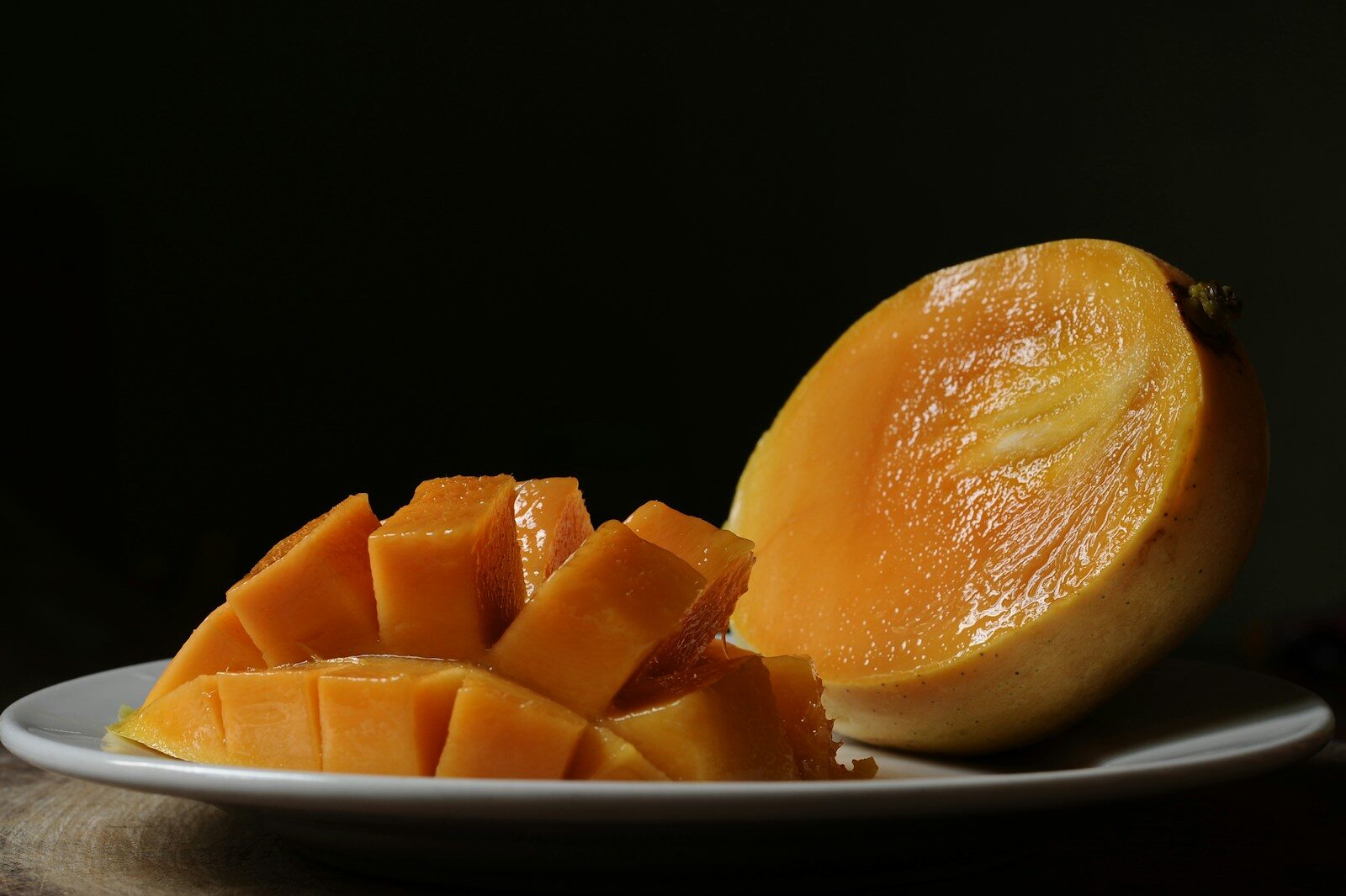
 Mango Season 2026 — June to August |
  Reviewed by HealthBanyan Team |
  11 min read |
  Based on Peer-Reviewed Scientific Evidence 2024–2025
 June 2026
 Yes Diabetics CAN eat mango — with the right rules
Prefer to listen? Play the YouTube audio of this article given above.
Every summer, millions of Indian diabetics give up mangoes completely — based on fear, not science. That fear is only partially justified.
Yes, mangoes contain natural sugar. Yes, eating three large mangoes at a sitting will spike your blood glucose dangerously. But the science is now clear: a small, carefully timed portion of the right mango variety, eaten the right way, does not cause dangerous blood sugar spikes in most well-controlled diabetics — and emerging research suggests regular moderate mango consumption may actually improve insulin sensitivity and HbA1c over time. This guide gives you every fact you need to enjoy the king of fruits this summer — safely, scientifically, and without guilt.
Read this completely. Share it with every diabetic family member who has been avoiding mangoes. The truth is better than the blanket ban.
Introduction · The Mango Question Every Diabetic Asks
Can Diabetics Eat Mangoes? India’s Most Important Summer Nutrition Question — Answered Honestly
The answer is not a simple yes or no. It is a qualified, nuanced yes — and this guide explains every condition attached to that yes.
Mango (Mangifera indica) — India’s national fruit and the self-declared King of Fruits — is a source of genuine nutritional conflict for people managing diabetes. On one hand, it is rich in natural sugars: a 100g serving of ripe mango contains approximately 14–15g of total sugar and 15g of carbohydrate. On the other hand, it is also rich in dietary fibre (2.6g per cup), Vitamin C (60mg — 66% of daily value), Vitamin A, polyphenols, mangiferin, and powerful antioxidants that have demonstrated anti-inflammatory and metabolic benefits in peer-reviewed studies.
The fear-based blanket ban — “diabetics cannot eat mango at all” — is not supported by scientific evidence. The glycemic index (GI) of mango ranges from approximately 41 to 56 depending on variety and ripeness, placing it firmly in the low-to-moderate GI category. Its glycemic load (GL) — a more clinically meaningful measure that accounts for portion size — is just 8.4 for a standard serving, well within the “low” category (under 10). For context, white rice has a GI of 72 and a GL of 25–30 — yet most Indian diabetics eat rice daily without question while completely avoiding mango. That inconsistency has no scientific basis.
A landmark Indian randomised controlled trial published in the Journal of Diabetes & Metabolic Disorders (August 2025) found that 250g of Safeda or Dasheri mango consumed daily for 8 weeks actually improved fasting blood glucose, reduced HbA1c, and improved insulin sensitivity in Type 2 diabetics compared to a control group eating the same caloric amount of bread. This does not mean diabetics should eat mango unrestricted — but it does mean the blanket ban deserves to be revisited.
Who must read this? Every Indian diabetic who has been told to completely avoid mango and wants to know the real science; parents managing a diabetic child’s diet during summer; adults caring for diabetic elderly parents during mango season; and every nutrition-conscious Indian who wants evidence-based answers about seasonal fruits and blood sugar.
Mango is not the enemy. Misinformation about mango is. This guide corrects the record — completely and honestly.
Real Story · When Fear of Mango Went Too Far
Kavita’s Story: Six Summers of Mango Guilt — Until Science Said Otherwise
A story from Janakpuri, West Delhi — when one WhatsApp message caused six years of nutritional deprivation.
Kavita Mehrotra, 52, a schoolteacher in Janakpuri, West Delhi, had been managing Type 2 diabetes for six years. She was a lifelong mango lover — the smell of ripe Langra mangoes from the vendor outside her building was her favourite part of every Delhi summer. In 2020, her sister forwarded her a WhatsApp message: “Diabetics should NEVER eat mango — even one slice can spike sugar to 300.” Kavita took it as medical fact. She stopped eating mango entirely. Every summer for six years, she watched her family eat mangoes, served them to her children, and refused even a single piece herself. “Sab kehte the — mango mat khao, sugar badh jayegi. Maine maan liya bina soche samjhe.”
Meanwhile, Kavita was eating things that were genuinely far more damaging to her blood sugar than a small mango portion would have been: two glasses of packaged mango flavoured drink daily (“it says no added sugar on the label”), three cups of sweet chai, white rice twice a day, and bhatura with puri every Sunday. Her HbA1c in 2024 was 7.9% — not because she ate mango, but because she was focused on avoiding the wrong things while the real culprits went unchallenged. The irony was complete: she was depriving herself of a low-GI whole fruit while consuming high-GI processed foods without a second thought.
At her annual diabetologist review in June 2025, Kavita’s doctor specifically asked about her diet. When she proudly said she hadn’t eaten mango in six years, the doctor paused and asked: “And what about packaged mango drinks?” Kavita mentioned the two glasses daily. The doctor gently explained that packaged mango drinks — even those labelled “no added sugar” — often contain concentrated fruit juice with all fibre removed, producing a glycaemic spike far worse than a 100g serving of whole mango. The doctor told her she could safely eat 100g of Langra or Alphonso mango — her favourite varieties — two to three times a week, as a mid-morning snack paired with a small handful of almonds. “The whole fruit is not the problem,” the doctor said. “The juice — that is the problem.”
Kavita began testing her blood sugar before and two hours after eating 100g of Langra mango. Her post-mango reading: 143 mg/dL — a moderate, clinically acceptable spike that returned to baseline within two hours. She also eliminated the packaged drinks. Three months later, her HbA1c improved from 7.9% to 7.2%. She now eats 100g of mango two mornings a week during season — paired with five almonds — and checks her blood sugar to confirm it stays within range. She says: “Chhe saal maine mango band kiya tha — aur juice pees rahi thi. Science seekhne ke baad hi sach pata chala. Ab guilt nahi — sirf samajhdaari hai.”
 Key Lesson
The biggest mango-related diabetes mistake in India is not eating the fruit — it is drinking mango in juice, flavoured drink, or aamras form while avoiding the whole fruit. The fibre in a whole mango slows sugar absorption dramatically. Removing the fibre (as juice does) eliminates this protection and turns mango into a blood sugar spike delivery device. A 100g serving of whole mango is not only permissible for most well-controlled diabetics — it is nutritionally superior to the processed alternatives many diabetics consume in its place.
Eat the fruit. Never drink it. Fibre is the difference between a safe mango and a dangerous one.
Science · What Mango Actually Does to Blood Sugar
The Biology of Mango & Blood Sugar — What the Science Says
Understanding why mango behaves differently from pure sugar — and why that matters for diabetics.
Think of a whole mango as a sugar delivery system with a built-in speed limiter. The natural sugars in mango (primarily fructose, with smaller amounts of glucose and sucrose) exist within a matrix of dietary fibre, water, and polyphenols. This fibre matrix physically slows the digestion and absorption of the sugars — like eating sugar through a sponge rather than drinking it through a straw. The result: a slower, gentler, more manageable blood glucose rise compared to the same amount of sugar consumed without fibre.
Mango also contains mangiferin — a unique polyphenol found almost exclusively in mangoes — which has shown insulin-sensitising properties in multiple animal and human studies, potentially improving the body’s response to insulin. The carotenoids, Vitamin C, and other antioxidants in mango reduce oxidative stress and inflammation — both of which worsen insulin resistance. These beneficial properties are specific to the whole fruit and are substantially diminished or absent in mango juice, dried mango, mango sweets, or aamras.
The most important clinical concept for diabetics evaluating mango is Glycemic Load (GL) — not just Glycemic Index (GI). GI measures how fast 50g of carbohydrate from a food raises blood sugar. But 50g of carbohydrate from mango requires eating approximately 330g of mango — well beyond any reasonable single serving. GL accounts for realistic portion size: the GL of a standard 100g serving of mango is just 8.4, firmly in the “low” category (below 10). By comparison, a single serving of white rice has a GL of 25–30. The mango is metabolically far safer than the rice — yet the rice rarely gets questioned.
 What Latest Research Shows (2024–2025)
RCT: Safeda & Dasheri Improve HbA1c
An 8-week Indian RCT (Kehar et al., Journal of Diabetes & Metabolic Disorders, 2025) found 250g/day of Safeda or Dasheri mango reduced fasting blood glucose by 7–18.7 mg/dL and lowered HbA1c by 0.2–0.6% in Type 2 diabetics — significantly better outcomes than bread-consuming controls.

CGM Study: Mango ≤ Bread in Glucose Impact
A pilot crossover study using continuous glucose monitoring (CGM) published in European Journal of Clinical Nutrition (2025) found that Safeda, Dasheri, and Langra mango produced similar or lower glycemic profiles compared to bread in both diabetic and non-diabetic subjects — with Langra showing the lowest area under the curve.

Pre-Diabetes: 24-Week Mango Trial
A 24-week study (PMC, 2025) found daily mango consumption significantly improved glycemic control, insulin sensitivity, and body composition in adults with pre-diabetes. The researchers concluded mango is a “practical dietary intervention for metabolic health” — not a forbidden fruit for those at metabolic risk.

The Critical Caveat: Portion & Form Matter
All positive research is on whole fruit in measured portions (100–250g). Mango juice, aamras, dried mango, mango-flavoured products, and canned mango in syrup are metabolically very different from whole fruit — removing fibre, concentrating sugars, and producing significantly larger blood glucose spikes. The science does NOT support unlimited mango consumption.
The GI Table · Every Indian Mango Variety Rated
Glycemic Index of Indian Mango Varieties — Complete Scientific Reference
Based on peer-reviewed studies (2019–2025). GI values below 55 = Low. 55–70 = Medium. Above 70 = High.
Note: GI values vary with ripeness, growing conditions, individual metabolism, and measurement methodology. Values below represent published study means and estimated ranges from available scientific evidence. Always test your own post-meal blood sugar response — individual variation is significant.
| Mango Variety | GI (Published) | GL (100g) | Category | Diabetic Suitability |
|---|---|---|---|---|
| Langra North India’s favourite — UP, Bihar, Bengal |
50 | ~7.5 | LOW GI |
Excellent choice. CGM study showed lowest glucose area under the curve among varieties tested. 100g portion: safe for most diabetics. |
| Alphonso (Hapus) Maharashtra, Konkan — “King of Mangoes” |
41–51 | ~6.5–7.5 | LOW GI |
One of the lowest GI mango varieties tested scientifically. Alphonso had GI of just 4 in one African study (vs glucose=100) though Indian estimates are 41–51. Consistently among the safest for blood sugar. |
| Safeda (Banganapalli) Andhra Pradesh, Telangana — also popular in Delhi |
~51–55 | ~7.5–8.2 | LOW–MED |
Studied in 2025 RCT: 250g/day for 8 weeks reduced fasting blood glucose by 7 mg/dL and HbA1c by 0.6% compared to bread. Clinically demonstrated safe in controlled diabetic diet. |
| Kesar Gujarat’s prized variety — GI protected variety |
40–55 | ~6.5–8.0 | LOW GI |
GI estimated 40–55 range. Less ripe Kesar (firmer) has lower GI than fully ripe. High polyphenol content. 100g consumed with skin provides additional fibre benefit. |
| Dasheri Lucknow, UP — one of India’s most popular varieties |
55–56 | ~8.2–8.5 | LOW–MED |
GI 55–56 in published studies (Jptcp, 2023). 2025 RCT showed 250g/day reduced fasting glucose by 18.7 mg/dL and HbA1c by 0.2% vs bread. Safe at 100g with good blood sugar control. |
| Chausa (Chaunsa) North India — very sweet, late-season variety |
55 | ~8.3 | LOW–MED |
GI 55.43 in published study. Higher perceived sweetness but GL still low at standard portions. Limit to 80–100g. Higher sugar content than Langra — consume with protein pairing. |
| Totapuri (Ginimoothi) South India — tart, firm, commonly used in pickles |
~41–50 | ~6.0–7.5 | LOW GI |
Lower in sugar than ripe sweet varieties due to higher tartness and less fructose. Among the best diabetic options — especially when semi-ripe. Often used in raw mango preparations which have even lower GI. |
| Raw Mango (Kacchi Aam) All varieties — unripe / green stage |
~35–45 | ~4.5–6.0 |  LOWEST GI LOWEST GI |
Best diabetic option. Higher resistant starch, lower fructose, higher pectin fibre. Aam Panna (without added sugar) from raw mango is genuinely beneficial for diabetics — replaces electrolytes and has low GI impact. |
| Mango Juice / Aamras Fibre removed — sugar concentrated |
~60–70+ | ~15–20+ |  AVOID AVOID |
Fibre completely removed. Sugar concentrated. Glucose absorbed rapidly with no fibre buffer. Produces blood sugar spikes 2–3x larger than equivalent whole fruit. Packaged mango drinks even worse. Complete avoidance for diabetics. |
| Dried Mango / Amchur Water removed — sugar massively concentrated |
~70–80+ | ~25+ | AVOID |
Water removal concentrates sugars 5–7x compared to fresh mango. A small 30g portion of dried mango contains the equivalent sugar of 180–210g of fresh mango. Not appropriate for diabetics as a snack. |
 Scientific Sources for GI Data:
Dasheri & Chaunsa GI: Jptcp.com study (2023) — mean GI 55.80 & 55.43 respectively. Langra GI: ~50 (same study). Alphonso GI: 41–51 (multiple studies including JDAN Nigeria 2019, and estimated Indian studies). Safeda & Dasheri clinical outcomes: Kehar et al., Journal of Diabetes & Metabolic Disorders, August 2025 (8-week RCT in T2D patients). Langra lowest AUC: Bhatt et al., European Journal of Clinical Nutrition, September 2025. Kesar GI: Vecov Farms research, February 2025. Raw mango GI estimated from resistant starch content. All GI values reference glucose (GI=100) as standard. Individual variation in glycemic response is substantial.
Warning Signs · When Mango is Causing a Problem
Signs That Mango Is Spiking Your Blood Sugar — And What to Do
Your body will tell you if the portion was too large or the timing was wrong — learn to read the signals.
 Signs Post-Mango Glucose Spike
These occur 30–60 min after eating too much mango
 Sudden energy rush followed by fatigue
Increased thirst after eating
Mild headache or brain fog
Slightly blurred vision temporarily
Feeling hot or flushed
Blood sugar above 180 mg/dL at 2 hrs
Signs Mango is Being Tolerated Well
Your body handling the portion safely
No unusual fatigue 60–90 min after eating
No increased thirst or frequent urination
Clear, focused thinking after the meal
2-hour post-meal glucose below 140 mg/dL
Steady energy without a crash
No headache, no blurred vision
 When to Consult Your Doctor About Mango & Diabetes
Point 1: If your blood sugar consistently rises above 180 mg/dL two hours after eating even 100g of mango — reduce the portion to 50–75g and retest. If it still spikes above 180 mg/dL, discuss with your doctor whether mango is appropriate for your current level of glycaemic control.
Point 2: If your HbA1c is above 8.5% and your diabetes is currently poorly controlled — avoid mango until your blood sugar is better managed. The permissive guidance applies to well-controlled diabetics, not to those with dangerously high baseline glucose.
Point 3: If you are on insulin — always consult your doctor before adding any new fruit to your diet during the mango season, as the carbohydrate addition may require dose adjustments.
Point 4: If you have diabetic kidney disease (nephropathy) — mango’s potassium content may need to be considered in your dietary plan. Get in touch with your nearest specialist or dietitian for personalised guidance.
 Do NOT eat mango juice, packaged mango drinks, aamras, or dried mango — these are the dangerous forms, not the whole fruit. Do NOT eat mango late at night or as dessert after a carbohydrate-heavy dinner — this is the worst timing for a diabetic.
Myths vs Facts · Mango Misconceptions Busted
5 Dangerous Myths About Mangoes & Diabetes That Indians Believe
These myths cause unnecessary deprivation — and sometimes lead to worse alternatives being consumed instead.
Safe Eating Rules · The Diabetic’s Mango Playbook
6 Science-Backed Rules for Diabetics to Enjoy Mango Safely
Follow these six rules and the King of Fruits can be a safe, joyful part of your summer — even with diabetes.
 Rule 1: Keep It at 100g — Measure, Don’t Guess
100 grams of mango is approximately one medium-sized slice or half a small mango — roughly the size of your fist. Use a kitchen scale for the first few weeks until you can visually estimate. A typical Alphonso is about 200–250g total; eat half. A Langra is larger; cut one-third. Research supports 100g as a safe daily portion for well-controlled diabetics. Some studies used up to 250g — but 100g is the conservative, broadly applicable starting point.
100g is your maximum starting portion. Use a scale. Once you know your blood sugar response, you can adjust up or down.
 Rule 2: Eat It Mid-Morning or Afternoon — Never as Dessert
Best time: 10–11 AM (mid-morning snack) or 4–5 PM (afternoon snack) when blood sugar is near baseline. Worst time: immediately after lunch or dinner when carbohydrate from the meal is already raising blood sugar. Eating mango independently — not stacked on top of a meal — allows the glucose curve to rise and fall cleanly without compounding with meal carbohydrates. This single timing change can reduce mango’s glucose impact by 30–40%.
Mid-morning mango as a standalone snack is safe. Post-dinner mango dessert is dangerous. The food is the same — only the timing changes the risk.
 Rule 3: Pair Mango With Protein or Healthy Fat — Always
Protein and fat slow gastric emptying — reducing the speed at which mango’s sugars are absorbed. The ideal pairing: 100g mango + 5–7 almonds, OR 100g mango + a small cup of unsweetened Greek yogurt (dahi), OR 100g mango + 2 walnuts. Studies confirm pairing fruit with protein reduces post-meal glucose spikes significantly. Never eat mango alone on an empty stomach — this produces the fastest and highest glucose spike.
Mango + 5 almonds = a diabetic-safe snack. Mango alone on an empty stomach = fastest possible spike. Protein pairing is non-negotiable.
 Rule 4: Choose the Right Variety — Langra, Alphonso, Raw Mango First
Based on published GI evidence, the diabetic-safest variety choices are: (1) Raw/semi-ripe mango of any variety (GI ~35–45), (2) Alphonso / Hapus (GI ~41–51), (3) Langra (GI ~50), (4) Kesar (GI ~40–55), (5) Safeda (GI ~51–55). Higher-GI varieties like Chausa and very ripe Dasheri should be consumed in smaller portions (75–80g) with the protein pairing rule strictly applied. Avoid the sweetest, softest, most overripe mangoes — ripeness increases sugar content and GI significantly.
Langra and Alphonso are your safest summer choices. Raw mango (kacchi aam) is the safest of all — and makes the most beneficial aam panna.
 Rule 5: Walk for 15 Minutes After Eating Mango
A 15-minute brisk walk 15–30 minutes after eating mango activates muscle glucose uptake, reducing the post-mango blood sugar peak by 15–22%. This is not a permission to eat more mango — it is a strategy to further blunt the glucose curve from the controlled portion you have already eaten. Make the post-mango walk a ritual: eat your 100g mango at 10:30 AM, walk at 10:45 AM for 15 minutes. Your 2-hour post-mango reading will be meaningfully lower than without the walk.
Mango at 10:30 AM + walk at 10:45 AM = safest possible mango experience for a diabetic. Make this your summer ritual.
 Rule 6: Test Your Blood Sugar Before and 2 Hours After — Always, at First
Individual glycaemic response to mango varies significantly — factors including your current HbA1c, medications, gut microbiome, insulin sensitivity, and even the specific mango all affect the outcome. For the first 2–3 times you eat mango this season, test your blood sugar immediately before eating (record baseline) and exactly 2 hours after finishing. If the 2-hour reading is below 140 mg/dL, your body tolerates the portion well. If it is between 140–180 mg/dL, reduce the portion to 75g next time. Above 180 mg/dL — consult your doctor about whether mango is appropriate at your current level of control.
Test before and 2 hours after your first few mango sessions this season. Your glucometer is your most honest mango advisor.
Action Plan · Safe Mango Reintroduction Week
 Your 7-Day Diabetic Mango Safe-Start Plan
A structured week to safely reintroduce mango — monitoring your response and building confidence.
| Day | Morning | Mid-Morning / Afternoon | Evening |
|---|---|---|---|
| Day 1 | Check current blood sugar and HbA1c reports. Confirm your diabetes is reasonably controlled (HbA1c below 8.5%) before starting. | Buy fresh Langra or Alphonso mango — choose firm, ripe but not overripe. Use a kitchen scale and weigh exactly 100g. | Prepare your glucometer. Plan tomorrow’s mid-morning mango test: set phone alarm for 10:30 AM (mango) and 12:30 PM (2-hour test). |
| Day 2 | Normal breakfast. Test fasting blood sugar and record it. | 10:30 AM: Test blood sugar (pre-mango baseline). Eat exactly 100g of mango + 5 almonds. Walk 15 min immediately after. | 12:30 PM: Test blood sugar (2-hour post-mango). Record the reading. Was it below 140 mg/dL? Note result. |
| Day 3 | Review yesterday’s 2-hour reading. Below 140 mg/dL = mango tolerated well. 140–180 = reduce to 75g next time. Above 180 = consult doctor. | Rest day — no mango. Try a small portion (2 tbsp) of unsweetened aam panna made from raw mango instead. Test blood sugar. | Note: how did you feel after Day 2’s mango? Fatigue? Thirst? No symptoms? Energy stable? Record your observations. |
| Day 4 | Normal breakfast — lighter than usual. Less rice or roti than normal (compensating for mango day ahead). | 4:00 PM: Test blood sugar (afternoon baseline). Eat 100g mango (try Kesar or Safeda today) + small cup of curd (dahi). Walk 15 min. | 6:00 PM: Test blood sugar (2-hour post-mango). Compare with Day 2’s result. Is the curd pairing better or similar? |
| Day 5 | Rest from mango today. Replace with a lower-GI fruit: guava, jamun, apple (with peel), or pear. Test to see how these compare. | Review your mango notes from Day 2 and Day 4. Which variety produced a lower 2-hour reading? Make that your preferred mango this season. | Share your findings with a family member who also has diabetes. Knowledge about mango timing and portions is worth sharing. |
| Day 6 | Try the aam panna test: make unsweetened aam panna from raw mango (boil, mash, add jeera, kala namak — NO sugar). Test blood sugar before and 2 hours after. | Confirm that packaged mango drink / aamras / mango juice is completely eliminated from your home this summer. Read labels on all drinks. | Celebrate: you now know exactly how your body responds to mango. This is personalised, evidence-based mango management. |
| Day 7 | Your personal mango protocol is now set: 100g, your preferred low-GI variety, mid-morning, with protein, followed by a walk. | Book your next HbA1c test for 3 months from now. You’ll confirm whether mango season had any impact on your 3-month average. |  Share this article with every diabetic family member who has given up mango. Bring them back to the science — and to summer joy. Share this article with every diabetic family member who has given up mango. Bring them back to the science — and to summer joy. |
Expert Insight · 23 Years of Clinical Wisdom
HealthBanyan Team: What I Tell My Diabetic Patients About Mangoes Every Summer
“In 23 years of clinical practice, the mango conversation is one that happens in every diabetologist’s clinic every summer — without exception. And in my experience, the fear of mango in Indian diabetics is disproportionate to the actual metabolic risk of a controlled serving of whole fruit. Every season I see patients who have given up mangoes for years, feeling deprived and guilty for occasionally eating one — while simultaneously drinking packaged mango drinks daily and eating three cups of white rice at every meal. The irony is that the mango, properly eaten, is among the less harmful carbohydrate choices for a diabetic — while the juice and the rice cause far greater glucose excursions. The science on this has become clearer with each passing year. The 2025 Indian RCT showing that 250 grams of Safeda or Dasheri mango per day improved HbA1c in Type 2 diabetics compared to bread was not surprising to me — it confirmed what clinical observation had suggested for years. Mango contains fibre, mangiferin, antioxidants, and pectin that slow sugar absorption and may genuinely support insulin sensitivity. The whole fruit, in the right portion, at the right time, paired with protein, and followed by movement — this is not dangerous. What is dangerous is telling diabetics to eliminate one of India’s most nutritious and culturally significant summer fruits while leaving their rice, their sweet chai, their maida, and their packaged juices completely unchallenged. Eat the mango. Test your blood sugar. Trust the science. And please — do not drink the juice.”
“A diabetic who gives up mango but keeps drinking sweet chai and eating white rice three times a day has the priorities reversed. Mango is not the enemy — ignorance about glycaemic load is.” — HealthBanyan Team
 Written By
Dr Nirmala Singh
Medical Writer & Health Educator, HealthBanyan
Reviewed By
HealthBanyan Team
 Designed By
Mr Virendra & Saharsh Rajput
Digital Design & Web Development, HealthBanyan
Quick Summary · 7 Rules to Remember
7 Things Every Diabetic Must Know About Mangoes 
1 Diabetics CAN eat mangoes — in 100g controlled portions, at the right time, with the right variety, paired with protein.
The blanket ban on mango is not evidence-based. Portion, timing, and variety are the three variables that determine safety.
2 Raw mango (GI ~35–45) and Alphonso (GI ~41–51) and Langra (GI ~50) are the safest varieties for diabetics.
Choose firm, not overripe. Semi-ripe mango always has a lower GI than fully ripe.
3 Mango juice and aamras are completely off-limits for diabetics — the fibre removal transforms mango from safe to dangerous.
Whole mango = fibre buffer. Mango juice = no protection. They are metabolically opposite foods.
4 Best time is mid-morning (10–11 AM) or afternoon (4–5 PM) — never as dessert after a carbohydrate-heavy meal.
Timing alone can reduce mango’s glucose impact by 30–40%. Never eat mango after rice or roti.
5 Always pair mango with protein (5 almonds, a cup of curd, or 2 walnuts) to blunt the glucose spike.
100g mango + 5 almonds = safe diabetic snack. Mango alone on empty stomach = fastest possible spike.
6 Test before and 2 hours after your first few mango sessions. Target: below 140 mg/dL at 2 hours.
Your glucometer is your most honest mango advisor. Test — don’t guess — your individual response.
7 A 2025 Indian RCT showed 250g/day of Safeda or Dasheri actually improved HbA1c in Type 2 diabetics over 8 weeks vs bread.
Mango may not just be safe — it may be actively beneficial for metabolic health when consumed correctly.
FAQs · Your Mango Questions Answered
Frequently Asked Questions — Mangoes & Diabetes
Q: How many mangoes can a diabetic eat per day?
The evidence-based starting portion for well-controlled diabetics is 100g per day — roughly one medium slice or one-third of a medium mango. Some studies have used up to 250g daily with beneficial results in controlled settings, but 100g is the broadly safe conservative recommendation for home use. More important than quantity is the combination of factors: variety (choose low-GI), timing (mid-morning or afternoon, never after a carbohydrate-heavy meal), pairing (always with protein), and monitoring (test your 2-hour post-mango blood sugar). Never eat more than one mango (200–250g) in a single sitting under any circumstances if you have diabetes. Frequency: 2–3 times per week is a sustainable approach for most well-controlled diabetics during mango season.
100g, 2–3 times per week, with protein, mid-morning = the evidence-based diabetic mango protocol.
Q: Which mango variety is best for diabetics in India?
Based on published scientific evidence, the best mango varieties for diabetics in India are: (1) Raw/semi-ripe mango of any variety — lowest GI of all (~35–45), (2) Alphonso (Hapus) — GI ~41–51, one of the lowest tested, (3) Langra — GI ~50, showed lowest glucose area under the curve in CGM study, (4) Kesar — GI ~40–55, high polyphenol content, (5) Safeda/Banganapalli — GI ~51–55, showed beneficial HbA1c effects in 2025 RCT. Avoid: the sweetest, most overripe versions of any variety; Chausa and very ripe Dasheri should be limited to 75–80g portions. Unsweetened aam panna from raw Totapuri or Langra is the most diabetic-safe mango preparation of all.
Langra and Alphonso: your two safest choices. Raw mango aam panna (no sugar): your safest preparation.
Q: Is aam panna safe for diabetics?
Yes — aam panna made from raw mango (kacchi aam) without added sugar is actually among the most diabetic-safe mango preparations available. Raw mango has lower fructose, higher resistant starch, and higher pectin content than ripe mango — all of which reduce its glycaemic impact. Traditional aam panna made by boiling raw mangoes and adding jeera, kala namak, and minimal jaggery or no sweetener at all — is low-GI, electrolyte-rich, and beneficial during summer heat. The critical caveat: NO added sugar or jaggery — even one tablespoon of added sugar transforms a safe drink into a blood sugar spike. Traditional homemade unsweetened aam panna is safe. Packaged aam panna drinks are not.
Homemade unsweetened aam panna = safe and beneficial for diabetics. Packaged aam panna = not safe. The difference is the sugar and the fibre.
Q: My HbA1c is 9.2% — can I still eat mango this summer?
With an HbA1c of 9.2%, your diabetes is currently poorly controlled — meaning your average blood glucose over the past three months has been approximately 215 mg/dL or above. At this level of control, it is advisable to avoid mango (and most high-GI or moderate-GI foods) until your blood sugar is brought under better control, ideally below HbA1c of 8.0%. This is not a permanent ban — once your HbA1c improves with medication, dietary changes, and exercise, you can revisit mango incorporation with your doctor’s guidance. Please consult your doctor or diabetologist to review and strengthen your current management plan before this summer’s mango season. Get in touch with your nearest specialist promptly.
Poor diabetes control (HbA1c above 8.5%) means avoiding mango for now — and focusing on improving overall control first. Mango can return once control improves.
Q: Can I eat mango at night if I keep the portion small?
Eating mango at night is the least suitable time — even with a small portion. After an evening meal that typically includes roti, rice, or dal, your blood sugar is already rising from the meal’s carbohydrates. Adding mango on top creates a compounded glucose spike that may not fully resolve before sleep — and overnight sustained elevation is particularly damaging to small blood vessels. Additionally, physical activity after a late-night snack is unlikely, removing the benefit of post-eating movement. The evidence is clear: morning or afternoon mango consumption is metabolically safer than night-time consumption for identical portions. If you must have mango in the evening, have it as an early evening standalone snack (around 5 PM) well before dinner — not after.
Never eat mango after dinner or at bedtime. 5 PM standalone snack is the latest acceptable timing — not post-dinner dessert.


References · Scientific Sources
Scientific References & Sources
1. Kehar S et al. “Glycemic, lipid, anthropometric and body composition responses to two Mango varieties versus white bread in people with type 2 diabetes: an 8-week randomised controlled trial.” Journal of Diabetes & Metabolic Disorders. 2025;24(2):183. PubMed: 40761695
2. Bhatt SP et al. “Glycemic responses of three mango varieties in subjects with and without T2D: a pilot crossover study using OTT and CGM.” European Journal of Clinical Nutrition. 2025. nature.com/ejcn
3. Assessment of postprandial glycemic response — GI values of Dasheri (55.80), Chaunsa (55.43), Langra (50.0), and Desi mango (47.30). Journal of Pharmacy & Technology in Clinical Practice. 2023. jptcp.com
4. Glycemic response of four mango varieties — Alphonso GI: 4 (vs glucose reference). Journal of Dietitians Association of Nigeria. 2019;10. ajol.info/jdan
5. Daily mango consumption for 24 weeks improves glycemic control and insulin sensitivity in adults with prediabetes. PMC / Nutrients. 2025. PMC: PMC12428706
Medical Disclaimer: This article is for educational purposes only and does not constitute medical advice. Individual blood sugar responses to mango vary significantly. Always test your own post-meal blood sugar and consult your doctor or diabetologist before making changes to your diabetes diet. This article does not endorse unlimited mango consumption for diabetics.