
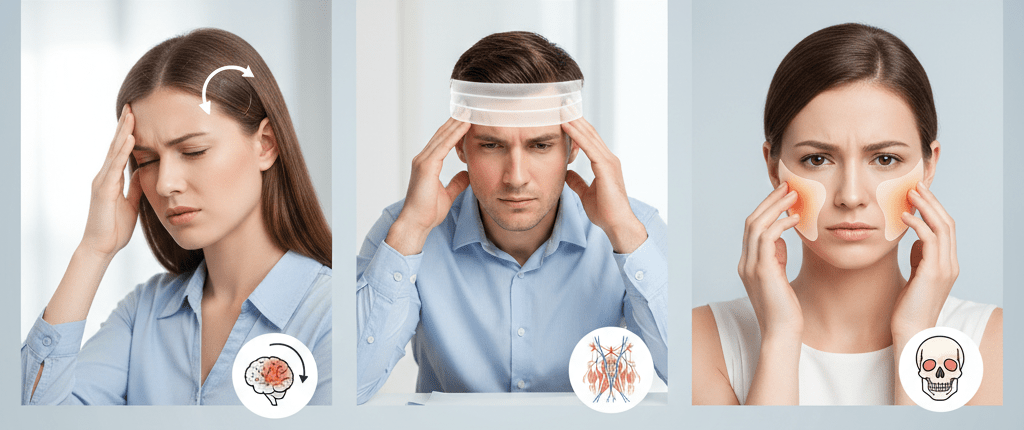
Migraine or Just a Headache? How to Tell the Difference Without Fear
माइग्रेन या साधारण सिर दर्द? बिना घबराए फर्क कैसे समझें
Almost Everyone Asks This Question
“I get headaches… but is it migraine?”
This single question brings more anxiety to patients than the pain itself.
A college student fears it may affect her future.
A working professional worries about lifelong medicines.
Parents panic when a child complains of repeated headaches.
The truth is reassuring — not every headache is migraine, and migraine itself is not dangerous when understood and managed correctly.
डर दर्द से नहीं, अनजान होने से पैदा होता है।
इस लेख का उद्देश्य वही डर दूर करना है।
First, What Is a Normal (Non-Migraine) Headache?
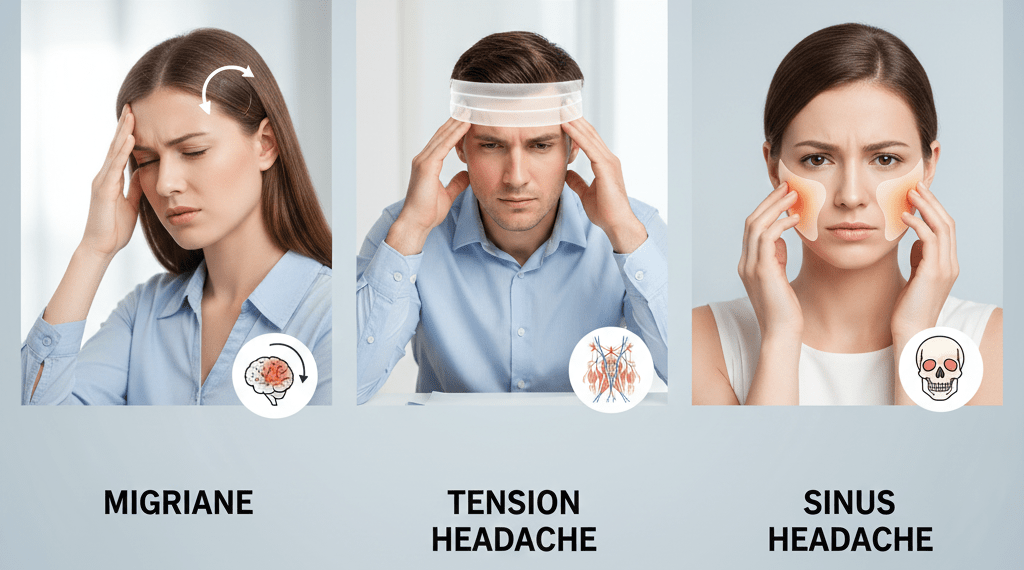
Most people experience tension-type headaches at some point in life.
These headaches usually: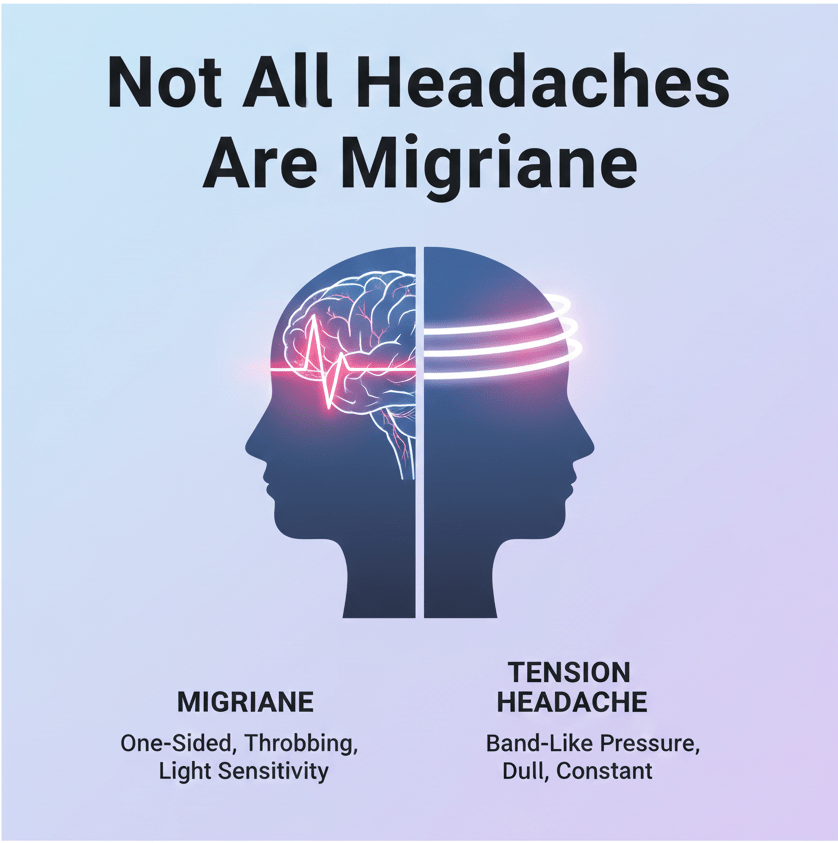
-
Feel like a tight band or pressure,
-
Affect both sides of the head,
-
Build gradually,
-
Do not cause vomiting or visual disturbance,
-
Improve with rest, sleep, and hydration.
These headaches are commonly related to Stress, poor posture, eye strain, lack of sleep, and dehydration.
In simple terms, A normal headache is usually situational and short-lived.
Then What Exactly Is Migraine?
Migraine is not just a severe headache.
It is a neurological sensitivity disorder.
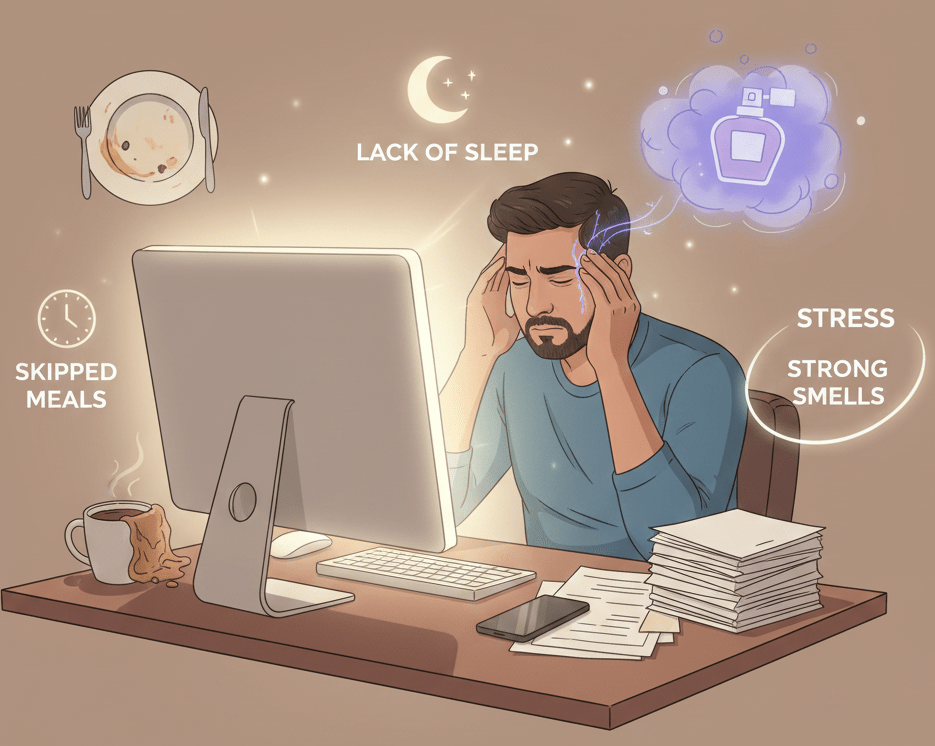
In migraine, the brain becomes unusually sensitive to:
-
Light,
-
Sound,
-
Smells,
-
Hormonal changes,
-
Sleep disturbances,
-
Certain foods or stress.
A migraine attack often includes:
-
Throbbing or pulsating pain,
-
Usually on one side (but not always),
-
Nausea or vomiting,
-
Intolerance to light or noise,
-
Need to lie down in a dark room.
आयुर्वेद में इसे “अर्धावभेदक” कहा गया है —
एक ऐसा सिर दर्द जो नसों और संवेदनशीलता से जुड़ा होता है।
A Story Doctors See Repeatedly
A 28-year-old woman comes worried: “Doctor, my headache is very severe. Is it something serious?”
Her scan is normal.
Neurological exam is normal.
History shows:
-
-
-
-
Headache once or twice a month,
-
Worsens before periods,
-
Accompanied by nausea,
-
Relieved by sleep.
-
-
-
Diagnosis: Migraine.
Her biggest relief?
Not the medicine, but understanding that migraine is manageable and not life-threatening.
Key Differences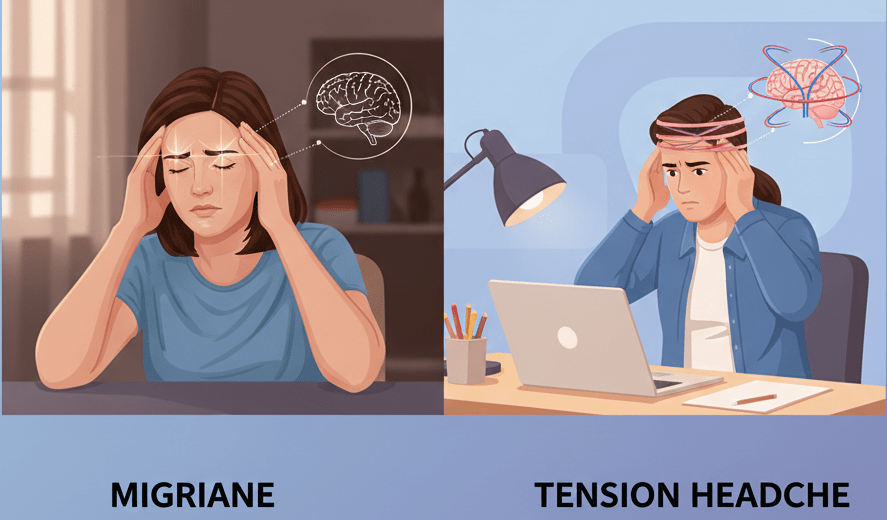
A normal headache behaves like a tired muscle — it protests, then settles.
A migraine behaves like an overreactive alarm system — it amplifies normal stimuli into pain.
What Migraine Is NOT
This clarity is essential.
Migraine is:
-
❌ NOT a brain tumor
-
❌ NOT a stroke
-
❌ NOT a sign of weakness
-
❌ NOT “imaginary” or psychological
Modern medicine confirms migraine as a functional brain disorder, not structural damage.
इसीलिए माइग्रेन में ज़्यादातर जाँचें सामान्य आती हैं।
When Headache Is NOT Migraine (Important)
Not every severe headache is migraine.
Seek medical evaluation urgently if headache: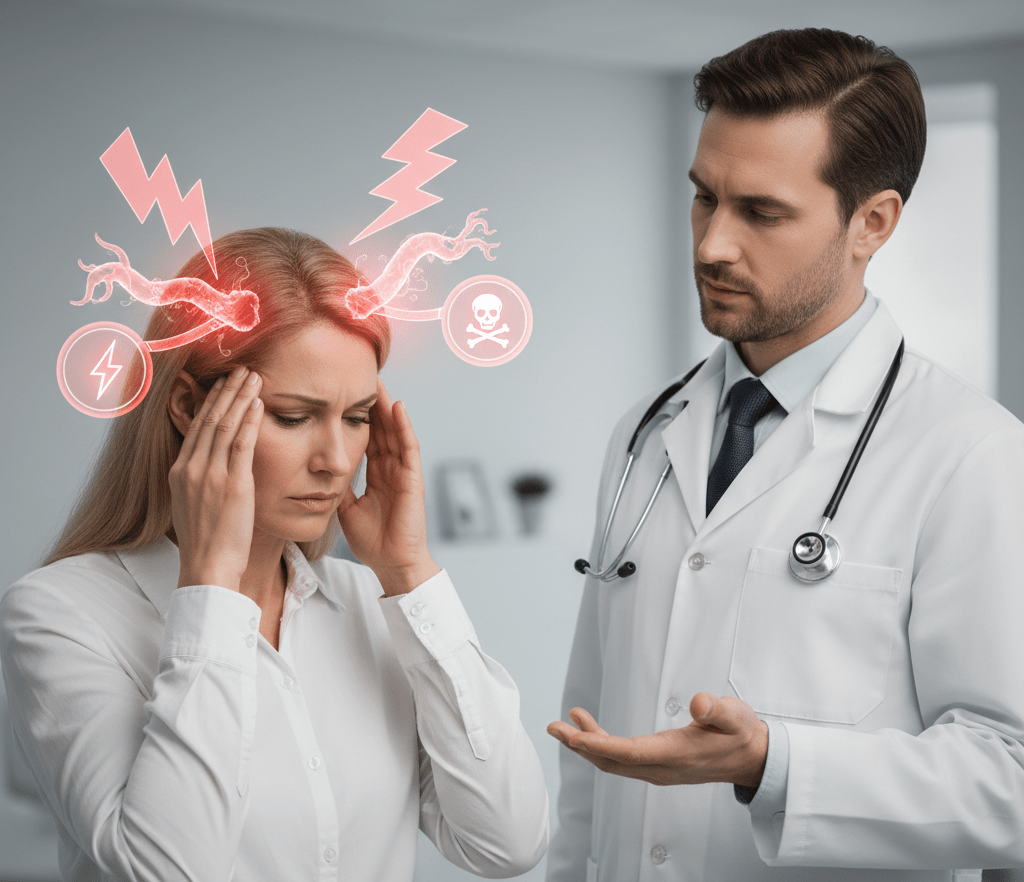
-
Starts suddenly and explosively,
-
Is progressively worsening,
-
Is associated with weakness, speech problems, seizures,
-
Follows head injury,
-
Occurs with persistent fever,
-
Appears for the first time after age 50.
These are red-flag headaches, not migraine.
Living With Migraine — Control Is Possible
Migraine do not need to control life.
Most patients improve with:
-
Regular sleep,
-
Meal discipline,
-
Hydration,
-
Stress management,
-
Trigger identification.
Some need preventive medicines — many don’t.
Ayurvedic routines like:
-
Regular oil massage,
-
Warm food,
-
Avoiding fasting,
-
Calming routines help stabilize sensitive nervous systems.
Balance is the real treatment.
Doctor’s Expert Opinion – Dr. R. K. Verma
“Migraine is frightening only when misunderstood. With correct diagnosis and lifestyle correction, most patients live normal, productive lives without complications.”
Quick Understanding Table (Summary)
| Feature | Normal Headache | Migraine |
|---|---|---|
| Nature | Pressure / tightness | Throbbing / pulsating |
| Side | Both sides | Often one side |
| Nausea | Rare | Common |
| Light sensitivity | No | Yes |
| Sleep relief | Often | Yes |
| Fearful? | No | Only if misunderstood |
Final Message — Why This Article Matters
Migraine should neither be feared nor ignored.
Understanding the difference between migraine and normal headache:
-
Reduces anxiety,
-
Prevents wrong treatment,
-
Saves years of suffering.
If this article helps someone stop fearing a headache —
or helps them seek the right help —
then it deserves to be shared.
Forward it to someone who keeps asking: “Is my headache migraine?”
Frequently Asked Questions (FAQ)
1. Is every severe headache a migraine?
No. Severity alone does not define migraine. Many severe headaches are due to stress, sinus issues, eye strain, or dehydration. Migraine has specific associated features like nausea and light sensitivity.
2. Can migraine damage my brain in the long run?
No. Migraine does not cause brain damage, paralysis, or memory loss. It is a functional disorder, not a structural disease.
3. Do I need a CT scan or MRI for migraine?
Usually no, if your doctor’s examination is normal and symptoms fit migraine. Scans are needed only when warning signs are present.
4. Can migraine start in childhood or teenage years?
Yes. Migraine commonly begins in school age, adolescence, or early adulthood—especially if there is family history.
5. Is migraine related to blood pressure?
Migraine itself does not mean high BP, but pain and stress during an attack may temporarily raise BP readings.
MCQs – Test Your Understanding (Patient Level)
Q1. Which feature most strongly suggests migraine?
A. Mild pressure on both sides
B. Pain relieved by massage
C. Throbbing headache with nausea
D. Headache only after long work
Correct Answer: C
Explanation: Migraine often includes throbbing pain with nausea and light sensitivity.
Q2. Which headache needs urgent medical attention?
A. Headache after poor sleep
B. Monthly headache relieved by sleep
C. Sudden severe “worst-ever” headache
D. Headache during fasting
Correct Answer: C
Explanation: Sudden explosive headache is a red flag.
Migraine is best described as:
A. Brain tumor
B. Blood vessel blockage
C. Neurological sensitivity disorder
D. Psychological illness
Answer: C
Explanation: Migraine is due to increased brain sensitivity, not structural damage.
Q4. Which factor commonly triggers migraine?
A. Balanced diet
B. Regular sleep
C. Skipping meals
D. Adequate hydration
Answer: C
Explanation: Fasting and irregular meals are common migraine triggers.
Q5. Overuse of painkillers can lead to:
A. Permanent cure
B. Lower BP
C. Chronic daily headache
D. Better sleep
Answer: C
Explanation: Frequent painkiller use can worsen headaches.
Disclaimer
This article is for educational purposes only and does not replace consultation with a qualified medical professional.