Headache: When Pain Is Harmless, and When It’s a Warning You Must Not Ignore
सिर दर्द: कब यह सामान्य है और कब यह शरीर की गंभीर चेतावनी हो सकता है
What Exactly Is a Headache?
A headache is not a disease by itself.
It is a signal — a message sent by the brain when something is off balance.
The pain may arise from: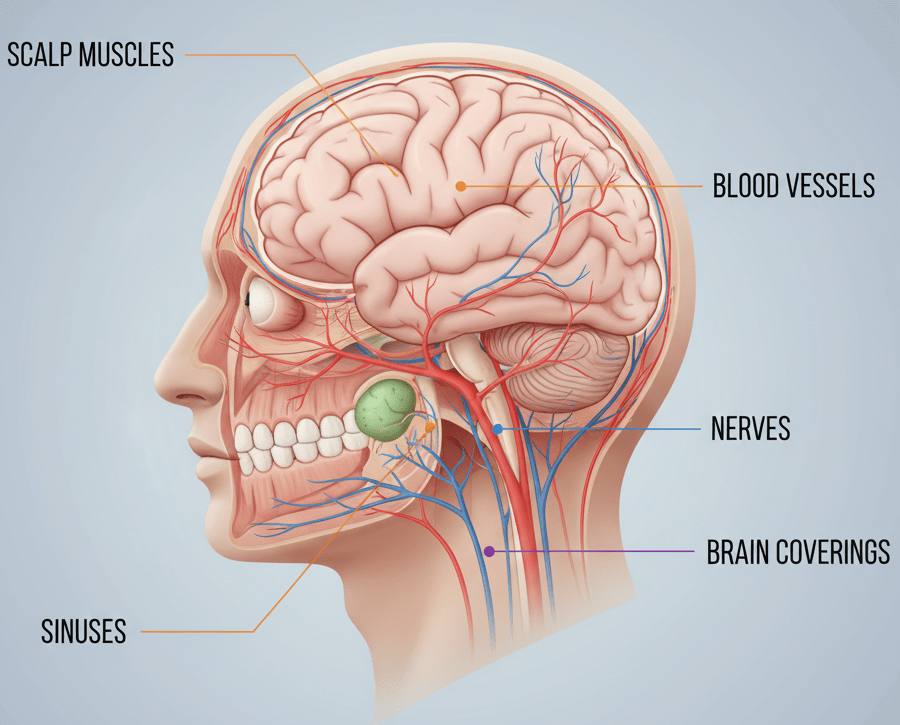
-
Blood vessels,
-
Nerves,
-
Muscles of the scalp and neck,
-
Sinuses,
-
Or pressure changes inside the skull.
That is why two people can have “headache” but for entirely different reasons.
सिर दर्द अपने-आप में बीमारी नहीं है।
यह शरीर का संकेत है कि कहीं न कहीं संतुलन बिगड़ा हुआ है — कभी मामूली, कभी गंभीर।
Understanding this difference is the first step to safety.
Headache in Children & Teenagers: Mostly Benign, Often Lifestyle-Related
When a child complains of headache, parents panic — but most childhood headaches are benign and reversible.
Common causes at this age include:
-
Dehydration,
-
Skipped meals,
-
Long screen time,
-
Eye strain,
-
Irregular sleep,
-
Exam stress.
A 12-year-old boy who comes with evening headaches often turns out to be not drinking water, sitting for hours on screens, and sleeping late.
बच्चों में सिर दर्द अक्सर जीवन-शैली से जुड़ा होता है, बीमारी से नहीं।
However, headache in children must be evaluated if it is:
-
Associated with vomiting,
-
Worsening in the morning,
-
Disturbing sleep,
-
Associated with vision changes or weakness.
Headache in Young & Middle-Aged Adults: Stress, Screens, and Suppression
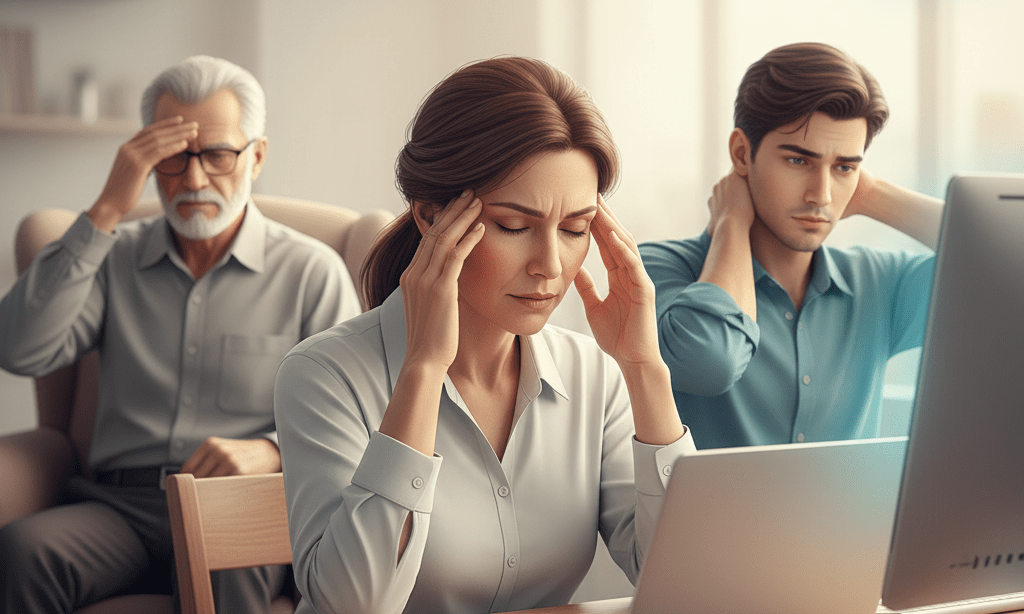
This is the age group where headaches are most common — and most ignored.
Typical benign causes include:
-
Poor posture,
-
Prolonged mobile/laptop use,
-
Caffeine excess or withdrawal,
-
Irregular meals and sleep.

A young professional taking painkillers twice a week may believe the headache is “normal”.
Doctors know this pattern well — it often leads to medication-overuse headache, where the medicine itself becomes the cause.
Headache After 40–50 Years: A Red-Flag Age Group
Headache appearing for the first time after middle age deserves caution.
Common yet important causes include:
-
Cervical spine degeneration,
-
Poor sleep quality,
-
Metabolic disorders.
But at this age, doctors become alert because some dangerous conditions also begin silently.
इस उम्र में नया सिर दर्द “साधारण” मानकर टालना खतरनाक हो सकता है।
Headache – Causes That Must Never Be Underestimated
Some headaches are not loud — but they are dangerous.
You must consult a doctor urgently if headache:
-
Is sudden and severe (“worst headache of life”),
-
Is progressive and worsening,
-
Is associated with vomiting, fainting, weakness, slurred speech,
-
Occurs with fever and neck stiffness,
-
It’s worse in the early morning,
-
Follows head injury,
-
Comes with vision loss or seizures.
These may indicate:
-
Stroke,
-
Brain infection,
-
Raised intracranial pressure,
-
Brain bleed,
-
Space-occupying lesion.
दर्द की तीव्रता नहीं, उसके साथ जुड़े लक्षण खतरे की पहचान होते हैं।
The Hidden Danger: Treating Without Understanding
One of the most common mistakes across all ages is self-medication.
Painkillers give relief — but relief is not cure.
Repeated suppression of pain results in
-
Delays diagnosis,
-
Masks serious illness,
-
Creates dependency,
-
Causes chronic daily headache.
Modern medicine calls it Medication Overuse Headache.
When Should You Definitely Show a Doctor?
-
-
-
-
-
-
-
-
- Headache is recurring weekly
- Painkillers are needed regularly
- Headache pattern has changed
- Daily life is affected
- Sleep is disturbed
- Fear starts accompanying pain
-
-
-
-
-
-
-
Final Message: Why This Article Needs to Be Shared
Headache is common — but neglect is dangerous.
Fear is unnecessary — but ignorance is costly.
If this article helps someone:
-
-
-
-
-
-
-
-
- Stop overusing painkillers,
-
Seek timely evaluation,
-
Understand their body better
-
-
-
-
-
-
-
Then it has served its purpose.
Doctor’s Expert Opinion – Dr. R. K. Verma
“Most headaches are not dangerous, but repeated headaches should never be ignored. Painkillers may silence pain, not the cause. Early evaluation often prevents long-term suffering and serious complications.”
Forward this to someone who says: “मेरा सिर तो अक्सर दर्द करता है।”
Disclaimer
This article is for educational purposes only and does not replace consultation with a qualified medical professional.