Diabetes and Ramadan: 5 Safety Rules You Must Know
Can You Fast in Ramadan If You Have Diabetes? A Doctor’s Honest Guide.
Ramadan is a month of faith, discipline, and deep spiritual connection. But if you live with diabetes, one question quietly worries you: “Is fasting safe for me?”
The truth is — it depends.
Islam never asks you to harm your health. And medically, fasting with diabetes requires planning, monitoring, and self-awareness.
Let’s make this simple and practical.
The first question that comes to mind is when we must break our fast. Well, the answer is simple: we should immediately end it if we notice shaking, sweating, dizziness (low sugar), extreme thirst, blurred vision (high sugar), severe headache, or fainting (dehydration)
More importantly, break your fast if your blood sugar is:
Below 70 mg/dL (3.9 mmol/L)
Above 300 mg/dL (16.7 mmol/L)
Waiting can be dangerous. Your health is an amanah (trust). Protect it.
Suhoor: The Meal That Decides Your Day. If you skip Suhoor or eat poorly, you increase your risk of sugar crashes. Choose slow-release energy foods:
- Oats
- Lentils
- Brown rice
- Whole-grain roti
- Eggs or yogurt
Avoid:
- Sugary cereals
- Salty pickles
- Excess tea or coffee
- Protein + fiber = steady energy.
Iftar: Don’t Let Hunger Trick You – After a long fast, it’s tempting to overeat.
Start gently:
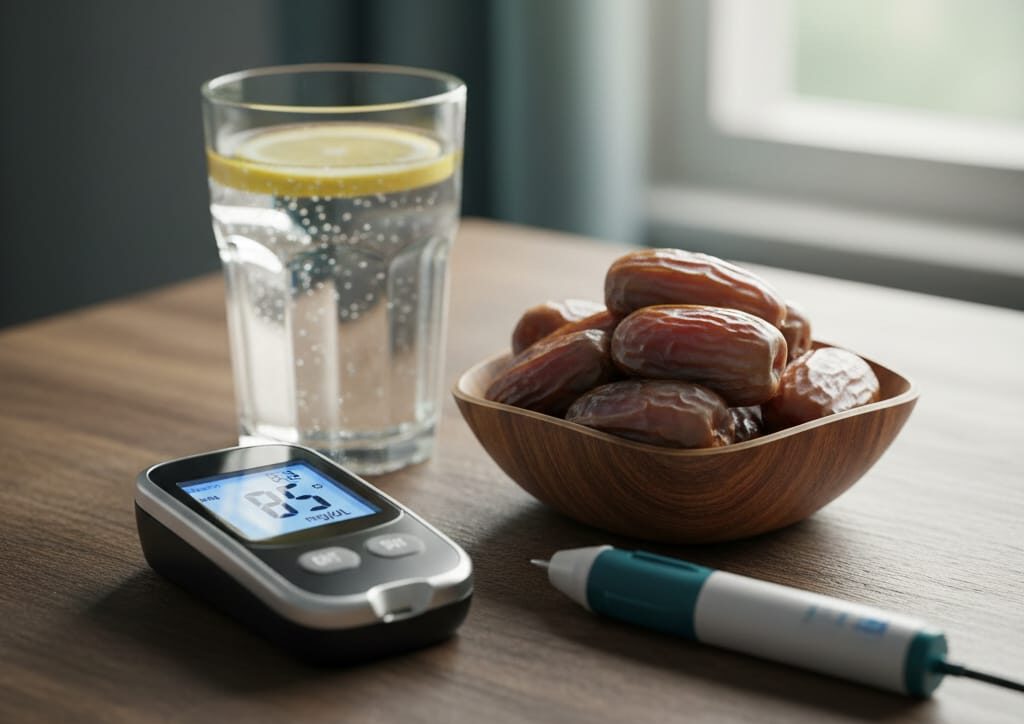
- 1–2 dates
- Water
Then eat:
- Grilled chicken or fish
- Vegetables
- Moderate portions of complex carbs
Avoid:
- Fried pakoras
- Sugary desserts
- Large, heavy meals
- Overeating at Iftar is the #1 reason for Ramadan sugar spikes.
Maintaining Hydration during fasting is a difficult job. You cannot drink water during the day, and so nighttime hydration is critical. Aim for 8–10 glasses of water between sunset and dawn.
Sip gradually.
Avoid sugary drinks.
Dehydration increases fatigue and sugar instability.
Important: Monitoring Does NOT Break Your Fast
Many people avoid checking their sugar during Ramadan, and this can be risky for their health. Finger-prick testing does not invalidate your fast.
Check especially:
- Midday
- Before Iftar
- Never stop insulin or blood pressure medication without consulting your doctor. Ramadan is not the time for guesswork.
The Bottom Line
Some people with diabetes can fast safely. Some should not. A pre-Ramadan medical consultation is essential — especially if you use insulin, have kidney disease, or struggle with unstable sugar levels.
Faith and health go together.
Safe fasting is successful fasting.
Frequently Asked Questions (FAQ)
- Can people with diabetes fast during Ramadan?
Some people with diabetes can fast safely, but not everyone. Patients with well-controlled Type 2 diabetes may fast under medical supervision. However, those with Type 1 diabetes, frequent hypoglycemia, pregnancy, kidney disease, or unstable sugar levels are usually advised not to fast. A pre-Ramadan medical consultation is strongly recommended.
2. Does checking blood sugar break the fast?
No. Checking blood sugar using a finger-prick test does NOT break the fast. In fact, monitoring is essential during Ramadan to prevent dangerous complications like severe hypoglycemia or hyperglycemia.
3. What blood sugar level requires breaking the fast?
- You must break your fast immediately if:
- Blood sugar is below 70 mg/dL (3.9 mmol/L)
- Blood sugar is above 300 mg/dL (16.7 mmol/L)
Ignoring these levels can lead to serious medical emergencies.
4. What is the best Suhoor meal for people with diabetes?
- The best Suhoor meal includes slow-digesting carbohydrates and protein, such as:
- Oats
- Lentils
- Whole-grain bread
- Eggs
- Yogurt
These foods help maintain steady blood sugar levels throughout the day and reduce the risk of sugar crashes.
5. How should diabetics break their fast at Iftar?
- Start with 1–2 dates and water. Then eat a balanced meal including:
- Lean protein (grilled chicken or fish)
- Vegetables
- Moderate portions of complex carbohydrates
- Avoid fried foods and sugary desserts, as they can cause sudden blood sugar spikes.
6. Can insulin be taken during Ramadan?
Yes. Insulin should never be stopped without medical advice. The timing and dosage may need adjustment during Ramadan. Most medication schedules are shifted to Iftar and Suhoor, but this must be personalized by a doctor.
7. How much water should diabetics drink during Ramadan?
Aim for 8–10 glasses of water between sunset and dawn. Drink gradually instead of consuming large amounts at once. Avoid sugary drinks and excessive caffeine to prevent dehydration.
8. Who should NOT fast during Ramadan?
- You should not fast if you have:
- Type 1 diabetes with poor control
- Recurrent low blood sugar episodes
- Advanced kidney disease
- Recent hospitalization for diabetes complications
- Pregnancy with diabetes
Kindly forward these tips to your near and dear ones suffering from diabetes and are in a dilemma whether to fast or not.
Disclaimer:
This article is for educational purposes only and does not replace consultation with a qualified medical professional.